
In the context of persistent, complicated, and multidrug-resistant (MDR/XDR) uropathogenic infections—frequently dominated by Klebsiella pneumoniae, Proteus mirabilis, and Pseudomonas aeruginosa—conventional antibiotic monotherapy routinely fails.
Why? Because these pathogens do not exist purely as free-floating (planktonic) cells; they construct a nearly impenetrable fortress known as a biofilm matrix.
Furthermore, standard bactericidal antibiotics are fundamentally designed to target actively dividing metabolic processes—such as cell wall synthesis, DNA replication, or active protein translation. Within the deep, oxygen-deprived, and nutrient-starved layers of a mature biofilm, a subpopulation of bacteria enters a state of metabolic dormancy, transforming into non-dividing “persister cells.”
Because these hibernating persisters are metabolically inactive, conventional antibiotics simply pass over them without causing any harm. Once the antibiotic course ends and drug concentrations drop, these dormant persisters detect changing environmental conditions through Quorum Sensing (QS) signaling molecules. Upon receiving these chemical wake-up cues, they exit dormancy, resume rapid metabolic division, and rebuild the entire biofilm fortress—driving the relentless cycle of chronic, recurrent infection.
Embedded within an extracellular polymeric substance (EPS) composed of exopolysaccharides, extracellular DNA (eDNA), structural proteins, and lipids, bacteria enter a protected sessile state where antibiotic penetration is severely hindered and resistance mechanisms are multiplied.
To successfully manage chronic urinary tract infections (UTIs) and biofilm-associated colonization (the hallmark host-microbe ecology explored on Hotel Klebsiella), combination strategies must target both the structural integrity of the EPS matrix and the metabolic machinery of the embedded microbes. Below is a comprehensive breakdown detailing the synergistic roles of proteolytic and digestive enzyme classes, N-Acetylcysteine (NAC), and Nitroxoline (Nx).
1. The Architectural Challenge: The Biofilm Matrix
In MDR and XDR uropathogenic strains, the biofilm acts like a multi-layered organic shield:
- The EPS Matrix Scaffolding: A dense, interwoven network of structural proteins, glycoproteins, extracellular DNA (eDNA), and exopolysaccharides binds the bacterial community together and prevents hydrophilic or macromolecular antimicrobial agents from penetrating.
- Enzymatic Defenses: Uropathogens often house specialized enzymes like metallo-β-lactamases (MBLs) that neutralize standard β-lactam antibiotics directly within the matrix layer.
- Nutrient and Oxygen Gradients: Bacteria deep inside the biofilm enter a dormant or slow-growing state, rendering traditional cell-wall-active antibiotics ineffective.
Dismantling this fortress requires a multi-pronged enzymatic and chemical approach: first degrading the structural proteins, complex carbohydrates, and disulfide bonds holding the matrix together, and second deploying multi-target antimicrobial agents that overcome metal ion homeostasis and enzymatic resistance.
2. Proteolytic & Digestive Enzymes: The Matrix-Scavenging Vanguard
Commercial systemic and digestive enzyme formulas combine targeted proteolytic and digestive enzymes to digest the diverse organic polymers that make up the biofilm matrix and inflammatory exudates.
A. Dedicated Proteolytic & Fibrinolytic Enzymes
Proteolytic enzymes (proteases) specifically target the proteinaceous scaffolding and structural cross-links that stabilize the EPS matrix:
- Serrapeptase: A proteolytic enzyme derived from Serratia bacteria species. It exhibits high affinity for non-living tissue, fibrin, and biofilm matrix proteins, digesting structural slime layers and inflammatory protein aggregates without harming healthy host tissue.
- Nattokinase & Lumbrokinase: These potent fibrinolytic enzymes degrade complex protein/fibrin networks and improve local tissue perfusion, enhancing immune cell infiltration and therapeutic drug delivery. Nattokinase is derived from natto (soybeans fermented with Bacillus subtilis var. natto), whereas lumbrokinase is isolated from earthworms (specifically Lumbricus rubellus or Eisenia fetida). Unlike nattokinase, lumbrokinase is not a single enzyme but a complex of six distinct proteolytic enzymes, exhibiting 10 to 40 times greater thrombolytic and fibrinolytic potency than nattokinase.
- Bromelain & Papain: Plant-derived cysteine proteases (from pineapple stem and papaya) that hydrolyze extracellular matrix proteins, cleave peptide bonds, and assist in modulating localized tissue edema.
- Trypsin & Chymotrypsin: Pancreatic serine proteases that cleave peptide bonds at specific amino acid residues (lysine/arginine and aromatic residues), digesting proteinaceous debris and microbial outer membrane proteins.
B. Typical Commercial Digestive Enzymes
Commercial digestive and broad-spectrum enzyme formulations incorporate specific enzyme classes designed to break down non-protein EPS components, lipids, and cellular debris:
| Enzyme Class | Typical Commercial Examples | Matrix Target in Biofilms & Intestinal/Urogenital Mucosa |
|---|---|---|
| Proteases / Peptidases | Acid Protease, Alkaline Protease, Peptidase (DPP-IV) | Hydrolyzes peptide bonds in matrix structural proteins and outer membrane proteins. |
| Carbohydrases (Polysaccharidases) | Amylase, Glucoamylase, Cellulase, Hemicellulase, Beta-Glucanase, Pectinase, Phytase | Breakdown of exopolysaccharide (EPS) slime layers, complex glucans, and bacterial glycocalyx matrices. |
| Lactase, Invertase, Maltase (Disaccharidases) | Lactase, Invertase, Malt Diastase | Cleavage of specific disaccharides and sugar residues involved in bacterial cell wall adhesion. |
| Lipases | Fungal or Bacterial Lipase | Degradation of lipid membranes, extracellular lipopolysaccharides (LPS), and fatty acid matrix components. |
| Specialized Nucleases / Mucolytics | Nuclease / Lysozyme (often blended in biofilm protocols) | Cleavage of extracellular DNA (eDNA) filaments and peptidoglycan bonds that anchor mature biofilms. |
3. N-Acetylcysteine (NAC): The Disulfide-Cleaving & Anti-Inflammatory Anchor
As detailed in NAC assessment The Science of N-Acetylcysteine: Evaluating Biofilm Disruption and Inflammatory Markers, N-Acetylcysteine (NAC) is a multifaceted small molecule recognized for its dual action as a mucolytic, antioxidant precursor, and anti-inflammatory agent:
- Disulfide Bond Cleavage (-S-S-): NAC possesses a free sulfhydryl (-SH) group that directly cleaves disulfide bonds in mucin and the extracellular polymeric substance (EPS) matrix. While proteolytic enzymes digest peptide backbones, NAC breaks chemical sulfur bridges, causing physical collapse of the mucooligomeric slime layer.
- Glutathione (GSH) Restoration: Acting as an L-cysteine precursor, NAC restores intracellular glutathione levels, protecting host tissues and mitochondria from reactive oxygen species (ROS) generated during chronic infection.
- Downregulation of Inflammatory Biomarkers: NAC suppresses NF-κB nuclear translocation, curbing downstream pro-inflammatory cytokines (such as IL-6, TNF-α) and reducing circulating C-reactive protein (CRP) levels.
4. Nitroxoline (Nx): The Metal-Chelating Executioner
Once proteolytic/digestive enzymes and NAC strip away the protective biofilm matrix and expose the underlying uropathogens (Klebsiella pneumoniae, Proteus mirabilis, Pseudomonas aeruginosa), Nitroxoline (Nx) covered in Nitroxoline in the Management of Urinary Tract Infections: Activity Profile Against Klebsiella, Proteus, and Pseudomonas, exerts its potent dual antibacterial mechanism:
- Extracellular Action: Nitroxoline acts as a strong chelator of divalent cations (Mg2+, Ca2+). By sequestering these structural ions, it destabilizes the outer Gram-negative bacterial membrane, disperses residual biofilm assemblies, and prevents uropathogen re-adhesion to uroepithelial cells.
- Intracellular Action: Nitroxoline penetrates the bacterial cell wall and chelates intracellular metal cofactors (Fe2+, Zn2+, Mn2+). This starves essential bacterial enzymes—such as RNA polymerase (blocking transcription) and metallo-β-lactamases (MBLs) (resensitizing resistant strains to β-lactam drugs)—while driving fatal oxidative stress via reactive oxygen species (ROS) and DNA damage.
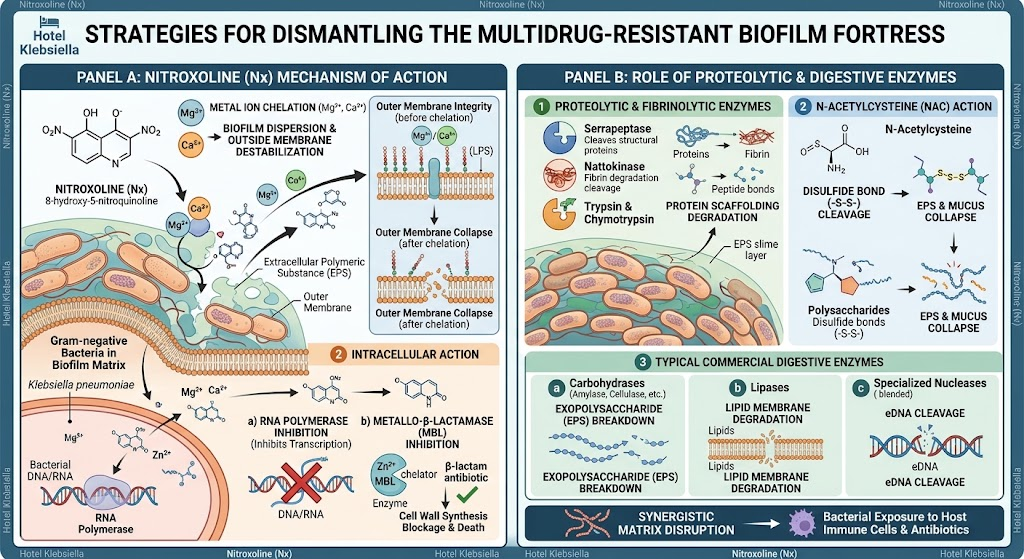
Panel A (Left): Nitroxoline (Nx) Mechanisms of Action. Nitroxoline operates through cation chelation. Extracellularly, it sequesters Mg2+ and Ca2+, destabilizing Gram-negative outer membranes, dispersing the biofilm matrix, and preventing epithelial cell re-adhesion. Intracellularly, it sequesters Fe2+, Zn2+, and Mn2+, inhibiting RNA polymerase (transcription) and metallo-β-lactamases (MBLs) while driving fatal oxidative stress (ROS) and DNA damage.
Panel B (Right): Role of Proteolytic, Digestive, and Thiol Enzymes. Demonstrates the synergistic degradation of the non-living extracellular polymeric substance (EPS) matrix. Proteolytic and fibrinolytic enzymes (Serrapeptase, Nattokinase, Trypsin, Chymotrypsin) cleave structural protein scaffolding; N-Acetylcysteine (NAC) breaks disulfide bonds (-S-S-) in mucin/EPS; and broad-spectrum digestive enzymes (carbohydrases, lipases, nucleases) break down exopolysaccharides, lipid membranes, and extracellular DNA (eDNA).
5. Synergistic Masterplan: How They Complement Each Other
When combined into an integrated protocol, these agents create a multi-stage sequential attack against MDR/XDR infections:
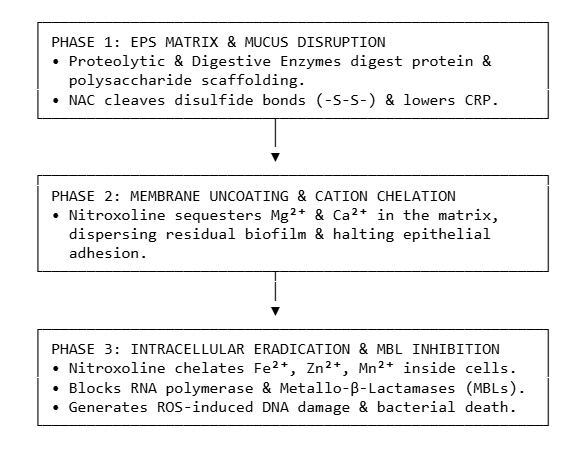
- Phase 1: Structural Disruption (Enzymes + NAC)
- Proteolytic enzymes (Serrapeptase, Nattokinase, Trypsin, Bromelain) and digestive enzyme blends (Amylase, Lipase, Cellulase) digest the protein, polysaccharide, and lipid framework of the biofilm matrix.
- Concurrently, NAC cleaves disulfide bonds within the EPS and thinned mucus, exposing hidden bacterial colonies while lowering local systemic inflammation (CRP/IL-6).
- Phase 2: Matrix Collapse & Outer Membrane Destabilization (Nitroxoline Extracellular Role)
- With physical barriers degraded, Nitroxoline binds free Ca2+ and Mg2+ in the matrix environment, ensuring complete biofilm dispersion and preventing bacterial re-adhesion to the urothelium.
- Phase 3: Intracellular Eradication & MBL Blockade (Nitroxoline Intracellular Role)
- Vulnerable uropathogens (Klebsiella pneumoniae, Proteus mirabilis, Pseudomonas aeruginosa) are penetrated by Nitroxoline. Intracellular metal chelation shuts down RNA synthesis, disables protective MBL enzymes, and induces lethal DNA-damaging oxidative stress.
Managing MDR/XDR uropathogens requires looking beyond simple antibiotic options. By pairing proteolytic/digestive enzymes and NAC to dismantle the extracellular matrix architecture and lower inflammatory markers, clinicians can clear the path for Nitroxoline to execute its potent metal-chelating, enzyme-inhibiting destruction of stubborn uropathogens.
The Strategic Sequence: Order of Biofilm Disruptors
When targeting complex, multidrug-resistant (MDR/XDR) uropathogenic biofilms (Klebsiella pneumoniae, Proteus mirabilis, Pseudomonas aeruginosa), timing and mechanisms dictate how these agents should be deployed.
1. Why Enzymes and NAC Are Taken Together (Phase 1: Physical & Chemical Matrix Breakdown)
Proteolytic enzymes, commercial digestive enzyme blends, and N-Acetylcysteine (NAC) form a synergistic “enzymatic cocktail” designed to simultaneously strip away the non-living outer scaffold of the biofilm matrix:
- Complementary Structural Targets:
- Proteolytic Enzymes (Serrapeptase, Nattokinase, Trypsin, Bromelain): Digest the protein scaffolding, fibrin networks, and cellular debris that physically anchor the biofilm to tissues.
- Digestive Enzyme Classes (Amylases, Cellulases, Lipases): Break down the complex exopolysaccharides (EPS) and lipid structures that make up the slimy matrix outer layer.
- N-Acetylcysteine (NAC): Cleaves disulfide bonds (-S-S-) in mucin and matrix cross-links, physically collapsing the gel-like matrix density.
- Shared Goal (Unmasking the Bacteria): None of these agents kill the bacteria directly on their own; instead, they act together as a chemical wedge to liquefy the EPS matrix, expose hidden bacterial colonies, and reduce localized inflammation (lowering CRP and IL-6).
- Safety & Compatibility: These molecules work strictly on extracellular matrices, polysaccharides, and non-living structural proteins, making them safe to administer together on an empty stomach to maximize systemic absorption and local tissue delivery.
2. Why Nitroxoline (Nx) Operates as a Separate Action (Phase 2 & 3: Metal Chelation & Microbial Eradication)
Nitroxoline (Nx) is shown in a separate panel because its mechanism moves beyond matrix degradation—it acts as an active antimicrobial executioner through metal ion chelation:
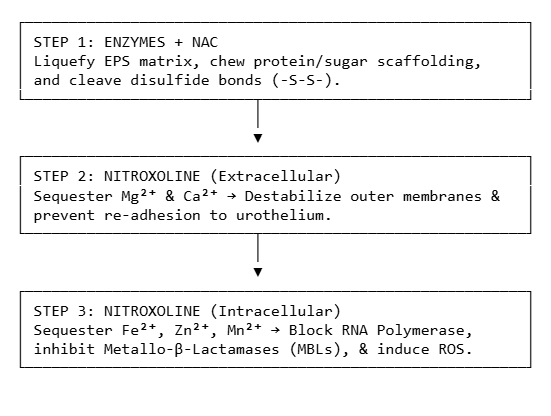
- Distinct Chemical Mechanism (Metal Chelation vs. Enzymatic Hydrolysis): While enzymes and NAC cleave chemical bonds within proteins and sugars, Nitroxoline works by chelating essential divalent metal cations (Mg2+, Ca2+, Fe2+, Zn2+, Mn2+).
- Sequential Dual-Stage Action:
- Extracellular Stage (Mg2+, Ca2+ Chelation): Once enzymes and NAC have thinned the outer slime layer, Nitroxoline strips away Mg2+ and Ca2+ ions that stabilize the bacterial outer membrane, causing membrane collapse and dispersing remaining biofilm fragments.
- Intracellular Stage (Fe2+, Zn2+, Mn2+ Chelation): Unencumbered by the matrix, Nitroxoline penetrates the bacterial cell. By sequestering intracellular metals, it inhibits RNA polymerase (transcription shutdown), blocks Metallo-β-Lactamases (MBLs), and triggers lethal oxidative stress (ROS).
Summary Table: Structural Roles
| Phase | Agent Group | Primary Target / Mechanism | Operational Role |
|---|---|---|---|
| Phase 1 | Proteolytic & Digestive Enzymes + NAC | Cleavage of peptide bonds, polysaccharides, lipids, and disulfide bridges (-S-S-). | Matrix Liquefaction & Unmasking: Strips away the protective slime layer and exposes bacteria. |
| Phase 2 | Nitroxoline (Extracellular) | Chelation of extracellular Mg2+ and Ca2+. | Membrane Collapse: Destabilizes Gram-negative outer membranes and prevents cell re-adhesion. |
| Phase 3 | Nitroxoline (Intracellular) | Chelation of intracellular Fe2+, Zn2+, and Mn2+. | Bacterial Eradication: Shuts down RNA synthesis, neutralizes MBL resistance enzymes, and induces ROS-mediated cell death. |
Nitroxoline (Nx) and enzymes (proteolytic, digestive, and NAC) can be taken as part of the same overall daily treatment protocol, but they should ideally be spaced apart rather than swallowed at the exact same time.
While they work synergistically toward the same ultimate goal—dismantling the biofilm and killing uropathogens—spacing them ensures each agent retains maximum biological potency.
Why It Is Better to Space Them Apart
1. Preventing Mutual Neutralization via Metal Chelation
- Nitroxoline’s Mechanism: Nitroxoline is a powerful metal chelator. Its antibacterial action relies on binding free divalent cations (Mg2+, Ca2+, Fe2+, Zn2+, Mn2+) in the environment to destabilize bacterial outer membranes and shut down intracellular metalloenzymes.
- Enzyme Co-factors: Many supplemental enzymes (especially metalloproteases, peptidases, and broad-spectrum digestive enzymes) rely on structural or catalytic metal ions (like zinc, calcium, or magnesium) to maintain their active 3D conformation.
- The Risk of Simultaneous Administration: Taking Nx simultaneously with enzyme formulations can cause Nitroxoline to bind directly to the functional metal cofactors of the oral enzymes or form complexes with peptide fragments. This can partially inactivate the enzymes before they digest the biofilm and reduce free Nitroxoline availability for uropathogen eradication.
2. Optimizing the Phased “Unmask then Strike” Sequence
The entire rational design of this protocol relies on a 2-step biological order:
- Step 1 (Pre-treatment / Exposure): Proteolytic/digestive enzymes and NAC act as a chemical wedge. They liquefy the extracellular polymeric substance (EPS) matrix, cleave disulfide bonds (-S-S-), and digest structural protein scaffolding.
- Step 2 (Targeted Destruction): Once the matrix barrier is thinned and uropathogens are exposed, Nitroxoline reaches the target site to chelate membrane-bound ions and penetrate naked bacterial cells.
Spacing them allows the enzymes and NAC to initiate matrix breakdown first, creating optimal conditions for Nitroxoline to hit the vulnerable uropathogens.
3. Different Absorption Requirements
- Enzymes & NAC: Designed for systemic biofilm and anti-inflammatory activity, systemic enzymes (like Serrapeptase or Nattokinase) and NAC should ideally be taken on an empty stomach (with a glass of water, ~30–60 minutes before meals or 2 hours after). Taking systemic enzymes with food causes them to be used up digesting dietary proteins rather than circulating to target tissues.
- Nitroxoline: Nitroxoline is absorbed rapidly through the gastrointestinal tract and excreted into the urinary tract. Depending on individual GI tolerance, antimicrobial agents like Nx are often taken around mealtime to minimize stomach upset.
Suggested Daily Timing Protocol
To maximize efficacy and avoid chelation interactions:
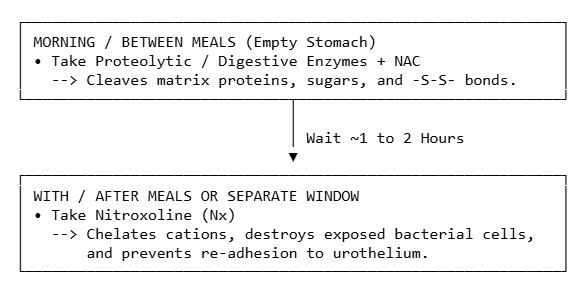
- Enzyme & NAC Window: Take on an empty stomach with a large glass of water to maximize systemic circulation and matrix disruption.
- Nitroxoline Window: Space Nitroxoline at least 1 to 2 hours apart from the enzyme dose to ensure independent absorption and prevent drug-enzyme binding.
Disclaimer: This information is provided strictly for scientific and educational purposes and is not a substitute for personalized medical care from a qualified treating physician. Take care when choosing your physician, as standards, ethics, and adherence to the Hippocratic oath and applicable laws vary widely. A physician is an advisor and practitioner, not a supreme authority with power of life and death over your body, despite how some may present themselves. Physicians can make mistakes. Take an active role in learning about your health and diagnosis, leave no stone unturned, press for clear answers to your follow-up questions, and consult multiple independent opinions before committing to significant medical decisions about your health.