
Clinical Summary & Literature Assessment
N-Acetylcysteine (NAC) is a drug approved by the Food and Drug Administration (FDA) and recognized by the World Health Organization (WHO) as an essential drug, widely used for the treatment of acetaminophen (paracetamol) overdose and as a mucolytic agent, in respiratory diseases. In many countries, NAC is commonly available as an over-the-counter nutritional supplement, with antioxidant properties.
It has a well-established safety profile, and its toxicity is uncommon and dependent on the route of administration and high dosages. Its remarkable antioxidant and anti-inflammatory capacity is the biochemical basis used to treat several diseases related to oxidative stress and inflammation.
N-acetylcysteine (NAC) functions as a precursor to glutathione (GSH), a mucolytic agent via the cleavage of disulfide bonds in mucus and extracellular matrixes, and an anti-inflammatory adjuvant.
The entire scope of mechanisms via which NAC exerts all of its antioxidant and cytoprotective capacity in different physiological conditions have not yet been fully clarified.
- C-Reactive Protein (CRP) & Systemic Inflammation:
- Randomized clinical trials (RCTs) show that NAC can efficiently lower inflammatory biomarkers (such as CRP and IL-6) in specific chronic or acute inflammatory contexts. However, it does not act as a primary anti-infective treatment to directly “reverse” severe bacterial sepsis on its own.
- In acute infections (e.g., severe pneumonia or COVID-19 ARDS) or postoperative organ stress, IV or high-dose oral NAC added to standard care (antibiotics, antivirals, organ support) has been associated with reductions in circulating CRP and oxidative stress markers.
- Bacterial Biofilm Disruption:
- In vitro & Animal Models: NAC robustly disrupts bacterial biofilms (including Pseudomonas aeruginosa, Staphylococcus aureus, and Helicobacter pylori) by degrading extracellular polymeric substances (EPS) and inhibiting bacterial adhesion.
- Clinical Trials: In human studies, the primary published evidence for NAC’s anti-biofilm effect comes from adjunctive protocols—most notably pretreatment with oral NAC before H. pylori antibiotic eradication regimens to improve clearance rates. In respiratory conditions (e.g., COPD, cystic fibrosis), inhaled or oral NAC reduces mucus viscosity and exacerbation rates, but clinical trials do not establish NAC as a standalone monotherapy capable of eradicating established systemic bacterial biofilms without concurrent antibiotic therapy.
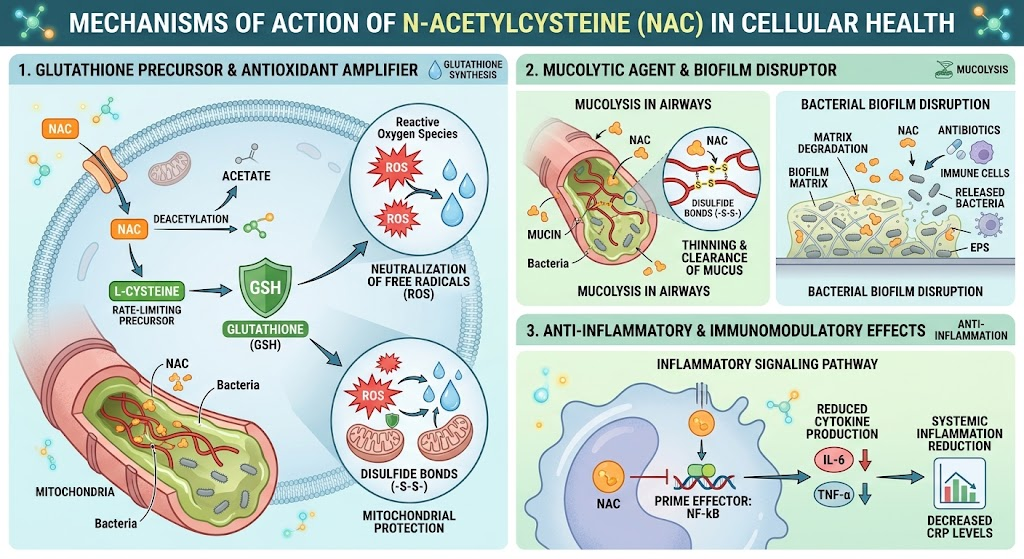
Schematic illustration detailing the three main biological pathways of NAC: (1) serving as a rate-limiting L-cysteine precursor for intracellular glutathione (GSH) synthesis to neutralize reactive oxygen species (ROS); (2) cleaving disulfide bonds (-S-S-) in mucin to thin mucus and degrading the extracellular polymeric substance (EPS) matrix to disrupt bacterial biofilms; and (3) inhibiting NF-κB nuclear translocation, resulting in reduced downstream pro-inflammatory cytokines (IL-6, TNF-α) and lower C-reactive protein (CRP) levels.
How N-Acetylcysteine Works at the Cellular Level?
- Glutathione Synthesis: Deacetylated into L-cysteine to replenish GSH, protecting mitochondria and scavenging free radicals.
- Biofilm & Mucus Cleavage: Directly breaks down disulfide bonds in mucus and degrades bacterial EPS matrices, allowing immune cells and antibiotics better penetration.
- Inflammatory Cascade Regulation: Suppresses NF-κB signaling, curbing systemic inflammatory responses and reducing markers like CRP and IL-6.
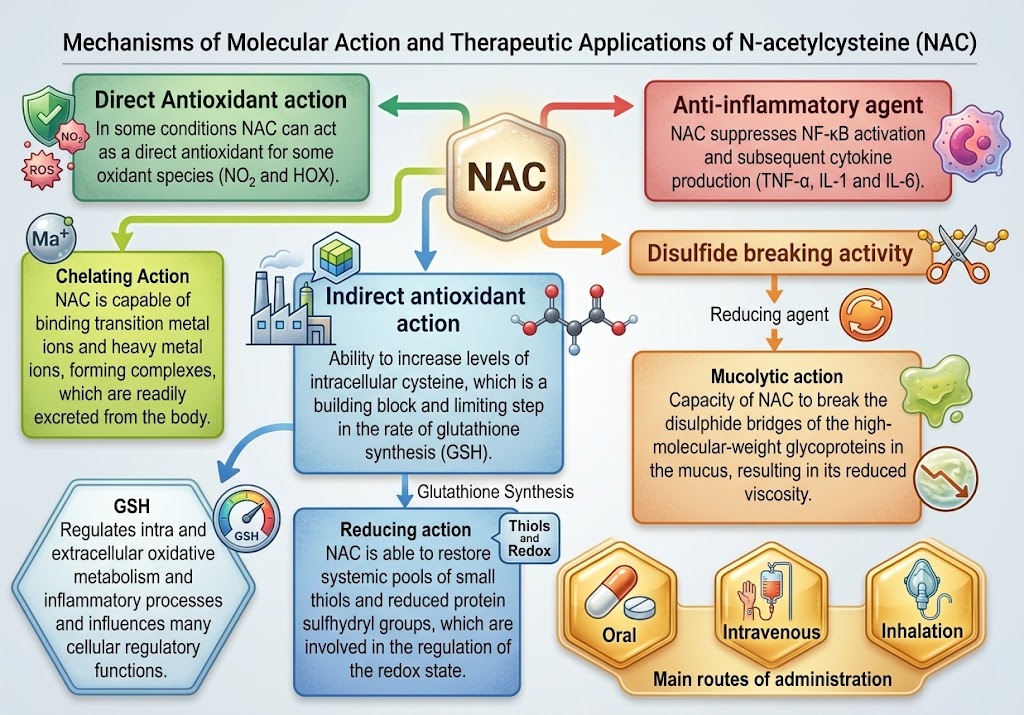
NAC exhibits direct antioxidant and chelating capabilities, anti-inflammatory activity through NF-κB suppression, and indirect antioxidant effects by serving as a precursor for glutathione (GSH) synthesis and restoring intracellular thiol pools. Additionally, its disulfide-breaking activity enables mucolytic action, reducing mucus viscosity. Standard administration routes include oral, intravenous, and inhalation therapies.
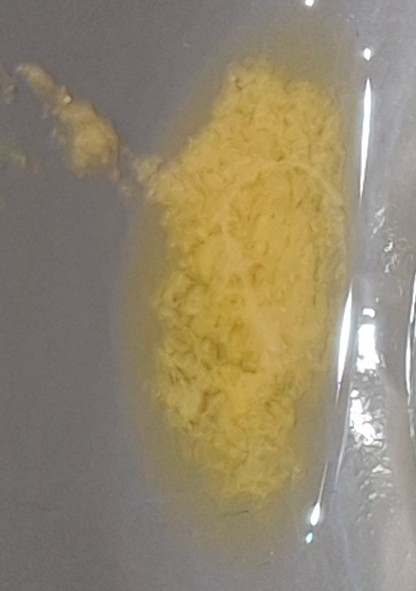
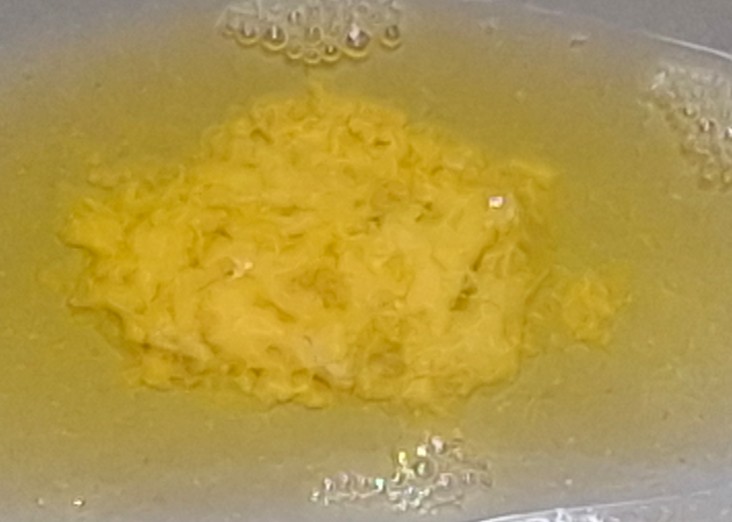
Flushed biofilm. NAC cleaving disulfide bonds in the biofilm while Nitroxoline strips the metal ions used as rebar enforcement, leaving characteristic holes in the matrix. Gelatinous biofilm looses structural integrity and collapses under it’s own weight deprived of the building blocks. The bacterial colony shielded behind the biofilm matrix become planktonic orphans. Release of bacterial endotoxins can lead to Jarisch-Herxheimer reaction and creation of toxic backpressure against vital organs, therefore it is essential to monitor reaction and manage the endotoxicity.
Medical Considerations
- Complementary Role: NAC is an adjunctive therapy (mucolytic, antioxidant precursor) and is not a substitute for targeted antibiotic or antiviral therapy in active severe infections.
- Bioavailability & Dosing: Oral NAC has limited systemic bioavailability (~6–10%) due to first-pass hepatic metabolism. Dosing strategies in trials vary widely between oral administration (600–1800 mg/day) and high-dose intravenous protocols used strictly in supervised ICU settings.
- Safety: While generally well tolerated, high-dose oral or IV administration can cause gastrointestinal distress, allergic reactions, or hypotension, requiring medical monitoring in clinical management.
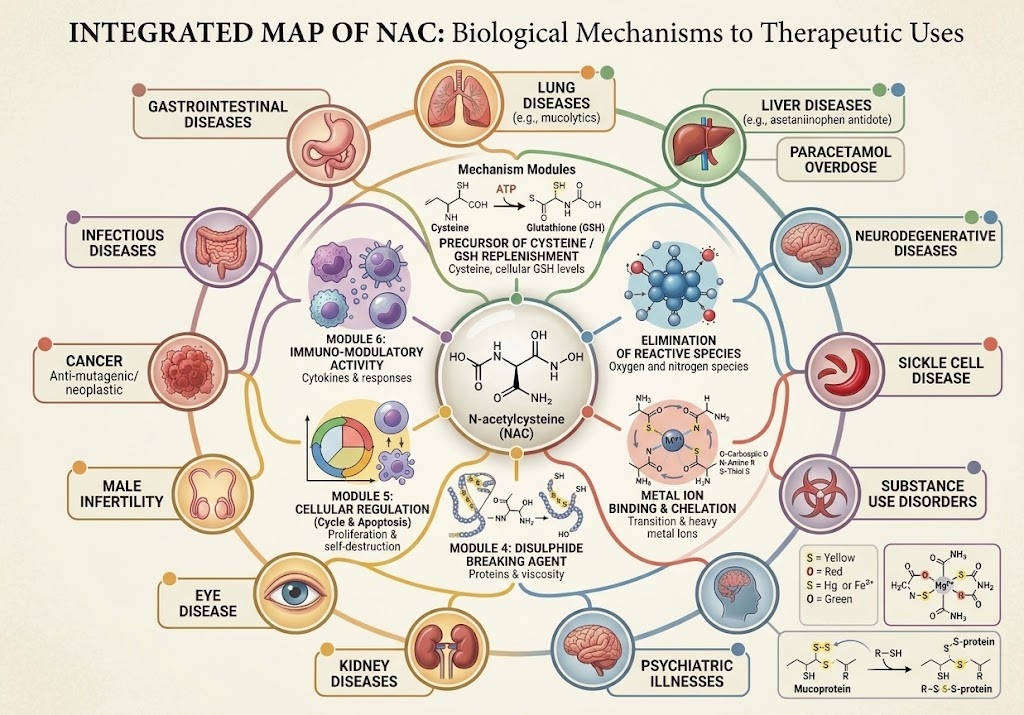
Central to NAC’s multi-target activity is its molecular structure, featuring a free sulfhydryl (−SH) group, which drives key primary biological mechanisms: direct scavenging of reactive oxygen and nitrogen species (ROS/RNS), metal ion chelation, direct disulphide bond reduction (mucolytic activity), replenishment of intracellular cysteine for glutathione (GSH) synthesis, modulation of cell cycle/apoptotic signaling, and suppression of pro-inflammatory immune cascades. These core mechanism modules map directly to NAC’s diverse clinical applications across pulmonary, hepatic, psychiatric, neurological, cardiovascular, renal, and systemic pathological conditions.
Volume and Focus of Scientific Research on NAC
N-acetylcysteine is one of the most thoroughly researched small-molecule drugs and nutraceuticals in modern medicine.
1. Scope of Published Works
- Over 25,000 Scientific Papers: A query on the National Center for Biotechnology Information (NCBI) PubMed database yields over 25,000 peer-reviewed articles referencing N-acetylcysteine or NAC across clinical medicine, pharmacology, biochemistry, and microbiology.
- Decades of Clinical Research: Discovered and synthesized in the 1960s, NAC has generated continuous academic literature for over 60 years. Annual publication rates maintain a steady growth trajectory due to its diverse physiological mechanisms.
2. Key Areas of Research Concentration
The scientific literature on NAC is predominantly concentrated in four core medical domains:
- Acetaminophen (Paracetamol) Toxicity & Hepatoprotection:
- Standard first-line IV and oral antidote for acetaminophen overdose globally (restores hepatic glutathione depots).
- Respiratory Medicine & Mucolysis:
- Used as a mucolytic agent in chronic obstructive pulmonary disease (COPD), cystic fibrosis, and acute pulmonary infections by breaking disulfide bonds in bronchial secretions.
- Biofilm Disruption & Adjuvant Antimicrobial Action:
- Extensively studied in microbiology and gastroenterology for its ability to break down the extracellular polymeric substance (EPS) matrix of bacterial biofilms (e.g., Helicobacter pylori, Pseudomonas aeruginosa, Staphylococcus aureus), potentiating standard antibiotic penetration.
- Systemic Anti-Inflammatory & Psychiatric/Neurological Applications:
- Evaluated in meta-analyses for modulating inflammatory biomarkers (reducing C-reactive protein [CRP], IL-6, and TNF-α) by regulating NF-κB transcription pathways and mitigating cellular oxidative stress.
Top Cited & Landmark Research Articles
Below are some of key peer-reviewed research papers and systematic reviews evaluating oral or IV N-acetylcysteine for inflammatory biomarker modulation (CRP reduction) in infectious/acute disease and for bacterial biofilm disruption in clinical settings:
1. Biofilm Disruption & Treatment Outcomes (Helicobacter pylori)
- Cammarota, G., et al. (2010). Biofilm Demolition and Antibiotic Potentiation by N-Acetylcysteine in Repairing Helicobacter pylori Infection. Applied and Environmental Microbiology, 76(24), 7888–7892. https://pubmed.ncbi.nlm.nih.gov/20478402
- Summary: Demonstrates both in vitro and in clinical endoscopies that NAC pretreatment disrupts gastric bacterial biofilms, significantly increasing H. pylori eradication rates in patients who previously failed antibiotic therapy.
2. Clinical Use in Biofilm-Associated Infection (H. pylori)
- Makipour, K., & Friedenberg, F. K. (2011). The Potential Role of N-Acetylcysteine for the Treatment of Helicobacter pylori. Journal of Clinical Gastroenterology, 45(10), 841–843. https://pmc.ncbi.nlm.nih.gov/articles/PMC3957414
- Summary: Reviews clinical trials where oral NAC (600 mg daily) was added to eradication regimens, breaking down mucosal biofilms and restoring bacterial sensitivity to standard antimicrobial drugs.
3. Inflammatory Response in Postoperative & Surgical Infections
- Molnar, Z., Szakmany, T., & Koszegi, T. (2003). Prophylactic N-acetylcysteine decreases serum CRP but not PCT levels and microalbuminuria following major abdominal surgery. A prospective, randomised, double-blinded, placebo-controlled clinical trial. Intensive Care Medicine, 29(5), 749–755. https://pubmed.ncbi.nlm.nih.gov/12682719
- Summary: A prospective RCT showing that short-term IV NAC administration significantly reduced postoperative serum C-reactive protein (CRP) levels on days 1 and 2 compared to placebo in high-risk surgical patients.
4. Modulation of Inflammatory Biomarkers in Critically Ill Patients
- Gamarra-Morales, Y., et al. (2023). Response to Intravenous N-Acetylcysteine Supplementation in Critically Ill Patients with COVID-19. Nutrients, 15(9), 2235. https://pubmed.ncbi.nlm.nih.gov/37405379
- Summary: Evaluated critically ill ICU patients receiving IV NAC alongside standard medical care. The NAC group demonstrated significant reductions in CRP and inflammatory markers compared to controls.
5. Antioxidant & Inflammatory Control in Septic Shock
- Aisa-Álvarez, A., et al. (2023). Randomized Clinical Trial of Antioxidant Therapy Patients with Septic Shock and Organ Dysfunction in the ICU: SOFA Score Reduction by Improvement of the Enzymatic and Non-Enzymatic Antioxidant System. Cells, 12(9), 1330. https://pubmed.ncbi.nlm.nih.gov/37174730
- Summary: Examined adjuvant antioxidant administration (including IV NAC) in septic shock patients, observing reductions in systemic inflammatory markers (CRP) and improvements in organ failure (SOFA) scores alongside antimicrobial therapy.
6. Broad Clinical Overview of Immunomodulatory Properties
- Tieu, S., et al. (2023). N-Acetylcysteine and Its Immunomodulatory Properties in Humans and Domesticated Animals. Antioxidants, 12(10), 1867. https://pubmed.ncbi.nlm.nih.gov/37891946
- Summary: A comprehensive synthesis of trials testing IV and oral NAC, detailing its effects on cytokine storms, CRP downregulation, and host oxidative stress in respiratory and systemic infections.
7. Therapeutic Scope & Clinical Utility
- Schwalfenberg, G. K. (2021). N-Acetylcysteine: A Review of Clinical Usefulness (an Old Drug with New Tricks). Journal of Nutrition and Metabolism, 2021, 9949453. https://pubmed.ncbi.nlm.nih.gov/34221501
- Summary: Systematically reviews oral and IV NAC dosing across clinical indications, summarizing its mucolytic, biofilm-disrupting, and acute anti-inflammatory properties across clinical trial literature.
More Recommended NAC Studies And Articles
N-Acetylcysteine (NAC): Impacts on Human Health
https://pmc.ncbi.nlm.nih.gov/articles/PMC8234027
Anti-Inflammatory and Anti-Oxidant Properties of N-Acetylcysteine: A Fresh Perspective
https://www.mdpi.com/2077-0383/13/14/4127
The effects of N-Acetylcysteine on serum level of inflammatory biomarkers in adults. Findings from a systematic review and meta-analysis of randomized clinical trials
https://www.sciencedirect.com/science/article/abs/pii/S1043466620302556
N-acetylcysteine: A Review of Clinical Use and Efficacy
https://www.nmi.health/n-acetylcysteine-a-review-of-clinical-use-and-efficacy
N-Acetylcysteine: A Review of Clinical Usefulness (an Old Drug with New Tricks)
https://onlinelibrary.wiley.com/doi/10.1155/2021/9949453
The Multifaceted Therapeutic Role of N-Acetylcysteine (NAC) in Disorders Characterized by Oxidative Stress
https://pure.johnshopkins.edu/en/publications/the-multifaceted-therapeutic-role-of-n-acetylcysteine-nac-in-diso
How the Combination of NAC and Boswellia Works Against CRP & High Inflammation?
The synergistic effect of high-dose NAC and Boswellic Acid works by simultaneously inhibiting lipid inflammatory mediators and oxidative cytokine pathways:
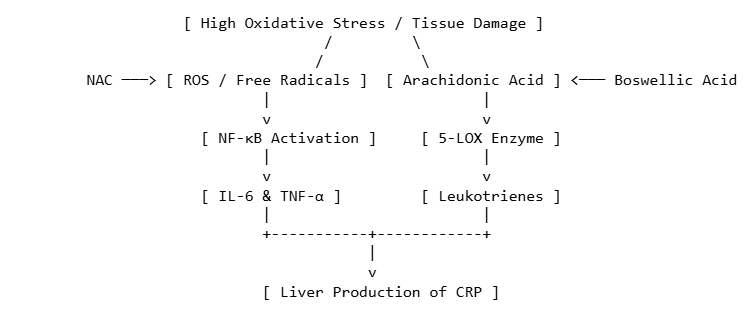
A. 600-1800 mg NAC (N-Acetylcysteine)
- Glutathione Repletion: NAC supplies L-cysteine, the rate-limiting precursor for glutathione (GSH) synthesis, restoring intracellular antioxidant defenses. Superpower
- Suppression of NF-κB: High systemic inflammation generates excessive Reactive Oxygen Species (ROS). ROS activates NF-κB, the central transcription factor for IL-6 and TNF-α. By scavenging ROS, 1800 mg of NAC inhibits NF-κB, downstream cytokine production, and subsequent liver synthesis of CRP.
- Mucolytic & Tissue Support: At 1800 mg/day (often split as 600 mg 3x/day) or 1200 mg (600 mg 2x/day), NAC effectively reduces systemic oxidative stress in chronic inflammatory conditions, pulmonary diseases, and autoimmune activity.
B. 300-1000 mg Boswellic Acid
- Direct 5-LOX Inhibition: Boswellic acids—specifically AKBA (3-O-acetyl-11-keto-β-boswellic acid)—are non-redox, selective inhibitors of 5-lipoxygenase (5-LOX). Frontiers
- Disrupting the Leukotriene–Cytokine Loop: By shutting down 5-LOX, Boswellic acid suppresses Leukotriene B4 (LTB4). Since leukotrienes recruit immune cells and stimulate further release of IL-6 and TNF-α, stopping this cascade prevents secondary driving of CRP production.
- High Dose Consideration: 1000 mg of pure/standardized Boswellic acids represents a high therapeutic dose (standard extracts are usually 300–600 mg). This provides potent anti-inflammatory coverage across joint, gut, or vascular tissues.
Expected Impact on CRP Levels
- Targeting the Cause vs. Symptom: Neither compound acts as a direct chemical neutralizer of CRP already present in the bloodstream; rather, they reduce the rate of liver CRP synthesis by cutting off IL-6 and TNF-α signaling.
- Timeline: Inflammatory markers like CRP have a half-life of roughly 19 hours. Once the upstream signaling (IL-6/NF-κB/5-LOX) is suppressed, CRP levels typically begin to decline over 7 to 14 days, with significant measurable drops seen in blood panels around 4 to 8 weeks into supplementation.
Key Considerations & Safety
- Gastrointestinal Tolerance:
- 1800 mg NAC: Can occasionally cause mild nausea, heartburn, or abdominal discomfort if taken on an empty stomach.
- 1000 mg Boswellic Acid: High doses of resin extracts can cause mild stomach upset or hypermotility. Taking both supplements with meals minimizes GI irritation.
- Combination Formulas: Ensure the Boswellia supplement does not contain added curcumin/turmeric if there is any history of gallbladder sludging or bile duct sensitivity, as curcumin causes strong gallbladder contractions.
- Underlying Root Cause: While NAC and Boswellia help down-regulate systemic inflammatory markers, a markedly elevated CRP (e.g., highly elevated acute-phase reactions) always requires identifying and monitoring the underlying trigger—whether an active infection, ongoing tissue recovery, or an autoimmune flare.
Disclaimer: This information is provided strictly for scientific and educational purposes and is not a substitute for personalized medical care from a qualified treating physician. Take care when choosing your physician, as standards, ethics, and adherence to the Hippocratic oath and applicable laws vary widely. A physician is an advisor and practitioner, not a supreme authority with power of life and death over your body, despite how some may present themselves. Physicians can make mistakes. Take an active role in learning about your health and diagnosis, leave no stone unturned, press for clear answers to your follow-up questions, and consult multiple independent opinions before committing to significant medical decisions about your health.