
When discussing antimicrobial resistance (AMR), an alarming narrative frequently takes hold: “superbugs are everywhere in the environment, lurking in soil, rivers, and agricultural runoff, waiting to leap across species and infect humans”.
While that prospect is deeply unsettling, genomic data reveals a reassuring truth: that direct cross-species leap from nature is actually a rare occurrence. The real danger does not lie in wild superbugs invading our bodies from the woods, farms or rivers, but rather in how resistance genes travel and where selection pressures actually thrive.
Rigorous genomic epidemiology tells this counterintuitive story. Building on our ongoing exploration of environmental resistance dynamics (see hotel-klebsiella.mywire.org/?p=732), we need to examine how landmark work by Professor Ed Feil reframes the threat—and why we must separate the survival of whole bacterial strains from the fluid mobility of resistance genes.
1. Introducing Professor Ed Feil and the “Heavy Armor” Cost
Professor Ed Feil is a leading researcher in microbial evolution and population genetics at the University of Bath. Utilizing advanced whole-genome sequencing, his team investigates how pathogenic bacteria spread and acquire drug resistance globally.
In his pivotal study examining environmental superbugs, Professor Feil highlighted two foundational conclusions:
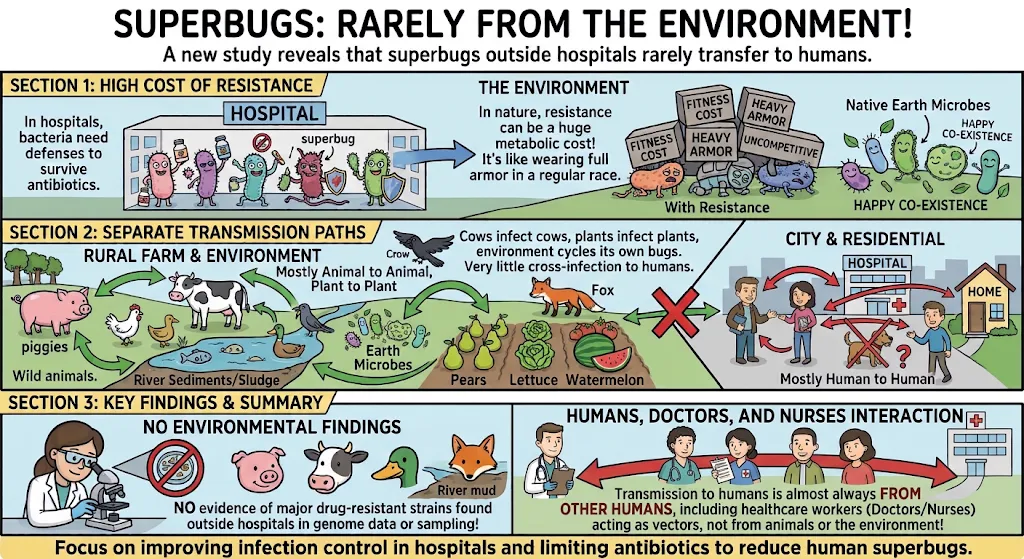
- The Absence of Clinical Strains Outside Hospitals: Carbapenem-resistant bacterial strains are virtually non-existent in environmental or animal reservoirs.
- Human-to-Human Dominance: Humans almost exclusively contract these resistant strains from other humans (primarily in healthcare settings), just as cows mostly infect other cows, and plant pathogens infect plants.
To understand why environmental spillover of resistant strains is so rare, Professor Feil offers a brilliant analogy: maintaining heavy multidrug resistance is like forcing a bacterium to wear full plate armor every second of the day, even when miles away from any battlefield. Sustaining large resistance plasmids and complex efflux mechanisms 24/7 demands a continuous, exhausting expenditure of cellular energy and resources. In a clinical setting flooded with antibiotics, that armor is essential for survival. Outside the hospital, however—in natural ecosystems lacking heavy antibiotic selection pressure—this metabolic “fitness cost” renders plasmid-armored bacteria sluggish and uncompetitive, leaving them easily outcompeted by native, unencumbered microbes. In the natural environment, the resistant bacterium effectively falls on its own sword—yet that sword remains behind, ready to be picked up by lesser-equipped bacteria in the ongoing war of resistance.
Most importantly, the heavy metabolic burden that resistant bacteria must endure creates a critical therapeutic window. Driven by a primal instinct to survive at all costs, a bacterium under stress will readily shed excess energy demands just to stay alive. As we have demonstrated in our work on plasmid curing (see The Stradiya Protocols—Part1: A Full Clinical Timeline, Biochemical Audit, and Institutional Failure Analysis of Public Health Cover-Ups), we can exploit this exact survival trade-off inside a living host. By making the metabolic cost of maintaining resistance plasmids unsustainable, we force the exhausted pathogen to jettison its costly genetic armor to conserve energy—effectively re-sensitizing the bacteria so they can be cleared with older, safer, and far less toxic conventional antibiotics.
2. The Nuance: Whole Strains vs. Genetic Cargo
While Feil’s findings demonstrate that direct infection chains for clinical superbugs remain overwhelmingly human-to-human, this does not mean natural ecosystems are irrelevant to the AMR crisis. A critical distinction separates strain-level transmission from gene-level mobility:
- The Epidemiological Dead-End (Strain Level): As Feil’s work proves, a fully armored, carbapenem-resistant clinical pathogen cannot easily colonize natural soils or animal hosts. It lacks the fitness to survive outside its specialized human-hospital niche.
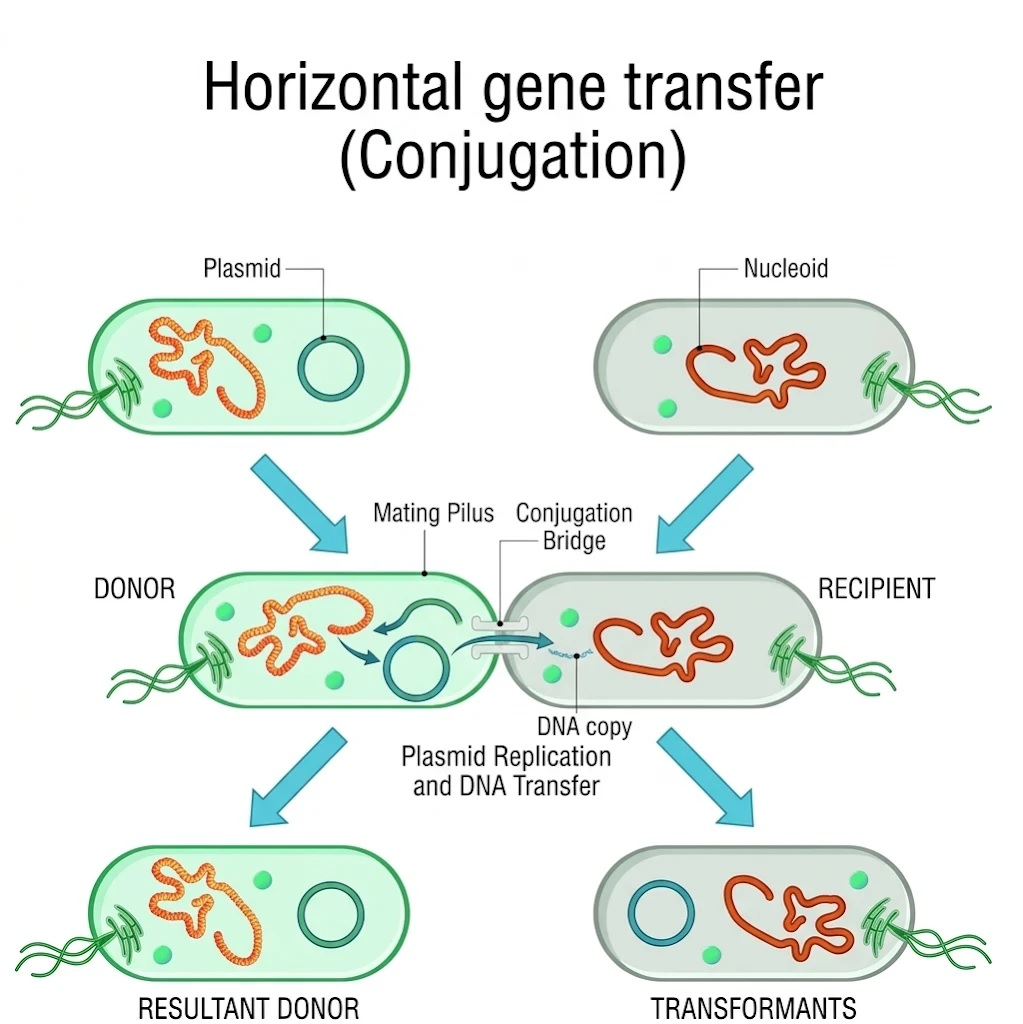
- The Genetic Highway (Horizontal Gene Transfer): While the armored bacterium may fail in the wild, the plasmids, transposons, and integrons carrying the resistance genes operate under entirely different rules. Harmless environmental bacteria or transient commensals can pick up resistance plasmids through horizontal gene transfer (HGT) without needing to compete as clinical pathogens.
3. Synthesis: The Two Halves of the AMR Crisis
Bridging Professor Feil’s insights with environmental surveillance data reveals a cohesive framework for understanding antimicrobial resistance:
- Healthcare Facilities Remain the Epicenter of Clinical Strains: Direct transmission of high-consequence resistant strains is driven by human-to-human contact and nosocomial exposure. Consequently, heavy public health investments must remain anchored in rigorous hospital infection control, hygiene, and strict antibiotic stewardship to eliminate selective pressures.
- The Environment is a Global Genetic Melting Pot: Wastewater treatment plants, agricultural runoff, and manure-treated soils may not be breeding grounds for successful clinical strains, but they serve as vast reservoirs where selective pressures (antibiotics, heavy metals) maintain resistance plasmids. These environments function as genetic “post offices,” where mobile elements are preserved, amplified, and made available to pass along the chain.
Conclusion
The threat of environmental superbugs is not that a hospital pathogen will crawl out of a river and infect a human. Rather, the environment acts as a persistent library of resistance blueprints. While Professor Feil rightly points out that heavily armored superbug cannot survive the journey out of the hospital, the mobile genetic elements it leaves behind ensure that resistance remains an interconnected, global challenge.
Disclaimer: This information is provided strictly for scientific and educational purposes and is not a substitute for personalized medical care from a qualified treating physician. Take care when choosing your physician, as standards, ethics, and adherence to the Hippocratic oath and applicable laws vary widely. A physician is an advisor and practitioner, not a supreme authority with power of life and death over your body, despite how some may present themselves. Physicians can make mistakes. Take an active role in learning about your health and diagnosis, leave no stone unturned, press for clear answers to your follow-up questions, and consult multiple independent opinions before committing to significant medical decisions about your health.