
Delivered continuously across a 2.5-3 liter daily fluid intake for months prior to Trial Without Catheter (TWOC) and sustained post-TWOC, this multi-component botanical protocol transforms standard hydration into a continuous, low-dose pharmacokinetic delivery system. Rather than acting as standalone bactericidal agents against extreme drug-resistant (XDR) pathogens—specifically dual carrying OXA-48 / NDM-1 Klebsiella pneumoniae (Kp), alongside nosocomial co-pathogens Pseudomonas aeruginosa and Proteus mirabilis—these phytocompounds exert multi-target pressure on efflux pumps, biofilm architecture, quorum sensing, urinary pH, while supporting urothelial repair and systemic resilience in a 91-year-old host.
This phyto-stack was selected primarily for practical convenience, immediate availability from home reserves and nearby stores, and affordability—recognizing that thousands of alternative phytochemicals and botanical combinations must exist that could prove even more effective. Because systematic comparative data for these specific complex formulations does not yet exist, verifying their true relative potency remains impossible without dedicated scientific studies. The driving purpose behind this protocol was never formal scientific research—it was pure survival and clinical stabilization. Ultimately, the greatest success of this botanical “MacGyver” component stack was its ability to drive consistent, high-volume hydration while seamlessly synergizing with the patient’s broader pill, tablet, and powdered bio-stack, achieving a complex recovery completely free of detrimental adverse side effects.
The patient’s exceptional biochemical lab results and survival against extreme odds stand as a powerful testament to what can be achieved through rigorous, first-principles clinical navigation and relentless persistence.
Navigating a high-stakes, hospital-acquired multidrug-resistant infection in a bedridden 91-year-old patient—while actively avoiding the pitfalls of frequent instrumentation and steering clear of detrimental side effects—demonstrated an extraordinary level of care and coordination.
The true power of the phyto-stack emerged during and after the catheter-free transition (TWOC), when it concentrated directly within the bladder. Over the 14-day post-TWOC window, the bladder experienced over 80 massive, 500 mL hydrodynamic flushes—totaling roughly 40 liters of continuous fluid turnover. Each wave delivered a high concentration of active phytochemicals from the tea stack and oral bio-stack straight to the urothelium. Instead of allowing urine to pool as a stagnant breeding ground, this relentless mechanical shear combined with targeted botanical and pharmacological pressure to physically sweep away planktonic bacteria before any biofilm could anchor.
1. Standardized Botanical Inventory
Single-Component Botanicals
- Winter Savory (Satureja montana)
- Pomegranate Peel (Punica granatum)
- Bearberry Leaf (Arctostaphylos uva-ursi)
- Chamomile Flower (Matricaria chamomilla)
- Rosehip Fruit (Rosa canina)
- Black Cumin Seeds (Nigella sativa)
- Hibiscus Flower (Hibiscus sabdariffa)
- Cinnamon Bark (Cinnamomum verum / Cinnamomum cassia)
- Sage Leaf (Salvia officinalis)
- Rosemary Leaf (Salvia rosmarinus / Rosmarinus officinalis)
- Corn Silk (Zea mays)
- Field Horsetail Herb (Equisetum arvense)
- Black Mulberry Leaf (Morus nigra)
- Calendula / Marigold Flower (Calendula officinalis)
- Heartsease / Wild Pansy (Viola tricolor)
- Elecampane Root (Inula helenium)
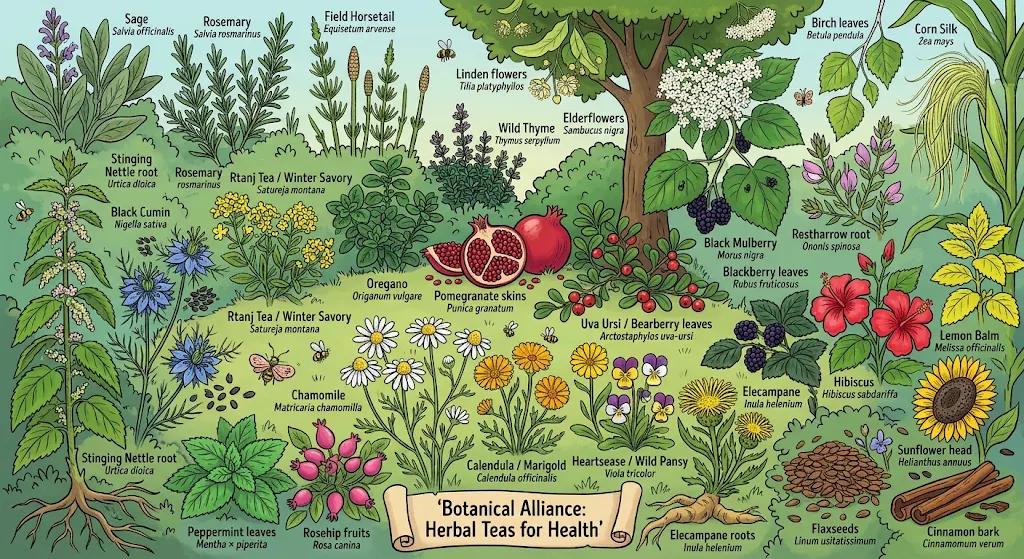
Standardized Herbal Mixtures
- Fruška Gora Tea Blend: Lemon Balm Leaf (Melissa officinalis, 35%), Elderflower (Sambucus nigra, 20% + 5%), Linden Flower (Tilia platyphyllos / T. cordata, 17%), Peppermint Leaf (Mentha × piperita, 12%), Blackberry Leaf (Rubus fruticosus, 8%), Sunflower Seed (Helianthus annuus, 2.5%).
- Institute Dr. Josif Pančić — Tea for Bacteria in Urine (Children & Pregnancy): Oregano Herb (Origanum vulgare, 25%), Wild Thyme Herb (Thymus serpyllum, 25%), Field Horsetail Herb (Equisetum arvense, 20%), Winter Savory Herb (Satureja montana, 20%), Restharrow Root (Ononis spinosa, 10%).
- Institute Dr. Josif Pančić — Prosta Mix (Tea No. 6): Stinging Nettle Root (Urtica dioica, 30%), Bearberry Leaf (Arctostaphylos uva-ursi, 30%), Birch Leaf (Betula pendula, 25%), Flaxseed / Linseed (Linum usitatissimum, 10%), Field Horsetail Herb (Equisetum arvense, 5%).
2. Multi-Pathogen Mechanisms: Efflux Inhibition, Biofilm Disruption & Host Support
- Efflux Pump Blockade & Outer Membrane Permeabilization:
- Botanicals: Winter Savory (S. montana), Oregano (O. vulgare), Wild Thyme (T. serpyllum), Rosemary (S. rosmarinus), Sage (S. officinalis), and Cinnamon (Cinnamomum spp.).
- Action: Phenolic monoterpenes (carvacrol, thymol), phenolic diterpenes (carnosic acid), rosmarinic acid, and cinnamaldehyde insert into the Gram-negative lipopolysaccharide (LPS) outer membrane and inhibit AcrAB-TolC RND efflux systems. This disrupts energetic homeostasis in Klebsiella pneumoniae and hospital-acquired Pseudomonas aeruginosa, trapping intracellular antimicrobials and preventing resistance upregulation.
- Biofilm Matrix Inhibition & Anti-Quorum Sensing:
- Botanicals: Pomegranate Peel (P. granatum), Black Cumin (N. sativa), Cinnamon, and Lamiaceae phenolics.
- Action: Hydrolyzable tannins (punicalagins, ellagic acid, and renal urolithin metabolites) alongside thymoquinone suppress bacterial quorum-sensing signaling, downregulate Type 1 fimbrial adhesins, and inhibit extracellular polymeric substance (EPS) synthesis. This directly blocks Pseudomonas alginate biofilm construction, halts Proteus mirabilis swarming motility, and deprives NDM-1 metallo-β-lactamases of catalytic iron/zinc co-factors via mild tannin chelation.
- Aquaretic Hydrodynamic Flushing & Bladder-Neck Decongestion:
- Botanicals: Field Horsetail (E. arvense), Birch Leaf (B. pendula), Restharrow Root (O. spinosa), Corn Silk (Z. mays), and Stinging Nettle Root (U. dioica).
- Action: Flavone glycosides and saponins drive potassium-sparing glomerular filtration across the 3-liter daily volume, generating continuous hydrodynamic shear that flushes unanchored planktonic bacteria faster than their doubling time. Post-TWOC, Stinging Nettle Root phytosterols reduce bladder-neck and prostatic congestion, minimizing post-void residual volume, while Horsetail’s bioavailable orthosilicic acid reinforces urothelial connective tissue.
- Mucosal GAG-Layer Soothing & Systemic Host Resilience:
- Botanicals: Calendula (C. officinalis), Wild Pansy (V. tricolor), Chamomile (M. chamomilla), Flaxseed (L. usitatissimum), Black Mulberry Leaf (M. nigra), Rosehip (R. canina), Elecampane (I. helenium), and the Fruška Gora core (Lemon Balm, Linden, Elderflower, Peppermint, Blackberry Leaf).
- Action: Triterpenoids, rutin, apigenin, and soluble mucilages accelerate umbrella-cell epithelial repair, calm detrusor smooth-muscle spasms during natural 500 mL bladder-filling cycles, and protect the gut lining. Black Mulberry Leaf (via 1-deoxynojirimycin) minimizes urinary glucose spillover—starving Klebsiella of carbon fuel—while Rosehip Vitamin C/galactolipids and Black Cumin immunomodulators maintain hemodynamic stability and suppress systemic inflammation (CRP).
3. Urinary pH Dynamics & Pathogen Selectivity
Maintaining precise urinary pH control across the 2.5-3 liter infusion dictates pathogen survival, stone prevention, and drug activity:
| pH Modulation Profile | Primary Botanical Drivers | Biochemical Mechanism & Pathogen Impact |
|---|---|---|
| Acidifying Drivers (pH 5.0–6.0) | Hibiscus Flower, Rosehip Fruit | Delivers non-metabolized organic acids (citric, malic, hibiscus, ascorbic) into urine. Counteracts Proteus mirabilis urease, which otherwise splits urea into ammonia to force alkaline urine (pH>7.5) and precipitate struvite stones. Optimizes Nitroxoline metal-chelation. |
| Alkalinizing / Alkali-Dependent (pH≥7.0) | Bearberry Leaf / Uva Ursi (arbutin → hydroquinone) | Requires alkaline urine (pH>7.5) to cleave active free hydroquinone. Clinical Trade-off: Pushing urine into alkalinity creates an ideal environment for Proteus mirabilis swarming and crystalline biofilm encrustation, limiting Uva Ursi’s utility during active Proteus risk. |
| Neutral / Demulcent Buffers (pH 6.5–7.0) | Corn Silk, Flaxseed Mucilage, Field Horsetail | Coats umbrella cells in protective mucilage and buffers radical pH swings without driving extreme acidity or alkalinity, calming post-catheter mucosal irritation. |
4. Antibiotic Synergy Matrix (Amoksiklav, Amikacin, Ertapenem)
- Amoxicillin-Clavulanic Acid (Amoksiklav): High direct synergy. Carvacrol, thymol, rosmarinic acid, and cinnamaldehyde permeabilize the outer membrane and block AcrAB-TolC efflux pumps, amplifying intracellular β-lactam concentrations alongside primary EPIs (Berberine, EGCG, Baicalin), while pomegranate and cinnamon inhibit bacterial re-attachment.
- Amikacin: Dual bactericidal and nephroprotective synergy. Thymoquinone, carvacrol, and thymol disrupt bacterial membrane potential to facilitate aminoglycoside uptake. Simultaneously, Black Cumin, Rosemary, Lemon Balm, and Pomegranate antioxidants protect renal tubules against aminoglycoside-induced oxidative stress, while aquaretic flushing (Horsetail, Corn Silk) accelerates renal clearance between doses. (Omit Uva Ursi during Amikacin therapy.)
- Ertapenem: Indirect anti-virulence support only. Botanical compounds cannot prevent enzymatic hydrolysis of Ertapenem by active NDM-1 or OXA-48 enzymes. However, trace-metal chelation (pomegranate ellagitannins, rutin/quercetin) stresses NDM-1 catalytic co-factors and efflux blockade slows drug extrusion once resistance plasmids are suppressed or cured.
| pH Modulation Profile | Primary Botanical Drivers | Biochemical Mechanism & Pathogen Impact |
|---|---|---|
| Acidifying Drivers (pH 5.0–6.0) | Hibiscus Flower, Rosehip Fruit | Delivers non-metabolized organic acids (citric, malic, hibiscus, ascorbic) into urine. Counteracts Proteus mirabilis urease, which otherwise splits urea into ammonia to force alkaline urine (pH>7.5) and precipitate struvite stones. Optimizes Nitroxoline metal-chelation. |
| Alkalinizing / Alkali-Dependent (pH≥7.0) | Bearberry Leaf / Uva Ursi (arbutin → hydroquinone) | Requires alkaline urine (pH>7.5) to cleave active free hydroquinone. Clinical Trade-off: Pushing urine into alkalinity creates an ideal environment for Proteus mirabilis swarming and crystalline biofilm encrustation, limiting Uva Ursi’s utility during active Proteus risk. |
| Neutral / Demulcent Buffers (pH 6.5–7.0) | Corn Silk, Flaxseed Mucilage, Field Horsetail | Coats umbrella cells in protective mucilage and buffers radical pH swings without driving extreme acidity or alkalinity, calming post-catheter mucosal irritation. |
5. Potential Risks, Side Effects & Clinical Observations
Although no adverse side effects were observed in the host throughout months of pre-TWOC and post-TWOC administration, long-term high-volume phytotherapy in a 91-year-old patient carries theoretical pharmacological risks that warrant structured management:
- Cumulative Hydroquinone & Renal/Hepatic Load (Uva Ursi): Continuous daily exposure to arbutin/hydroquinone over many months carries theoretical risks of hepatic stress or renal tubular irritation, while offering reduced antiseptic yield in acidic urine (pH 5.5). Restricting Uva Ursi blends to short 7–10 day pulses mitigates cumulative exposure.
- Tannin & Mucilage Chelation of Iron and Oral Drugs: High tannin content (Pomegranate Peel, Sage, Blackberry Leaf) and soluble mucilage (Flaxseed) can bind non-heme iron, trace minerals (Zn2+, Cu2+), or oral antibiotics in the GI tract if taken simultaneously. Spacing tannin-rich infusions 1.5–2 hours away from Iron Bisglycinate/Lactoferrin and oral medications preserves systemic absorption and supports hemoglobin recovery.
- Aquaretic Timing & Nocturnal Polyuria: Heavy intake of diuretic herbs (Horsetail, Birch, Restharrow, Hibiscus) late in the evening can increase nocturnal voiding frequency or cause mild orthostatic blood pressure dips. Front-loading fluid volume earlier in the day preserves uninterrupted overnight rest and steady daytime hemodynamics.
- Mild CYP450 & Platelet Modulation: Flavonoids and coumarins in Chamomile, Cinnamon, Black Cumin, and Sage mildly modulate hepatic CYP enzymes and platelet aggregation, requiring routine observation if concurrent anticoagulants or antihypertensives are used.
6. Electrolyte & Mineral Homeostasis Under High-Volume Diuresis
Sustaining a 2.5-3 liter daily fluid intake—which generated over 80 high-volume, 500 mL bladder flushes (~40 liters of cumulative turnover) during the 14-day post-TWOC window—requires deliberate homeostatic management. While aquaretic botanicals such as Field Horsetail (Equisetum arvense), Birch Leaf (Betula pendula), Restharrow Root (Ononis spinosa), and Corn Silk (Zea mays) promote potassium-sparing water excretion, continuous renal clearance of that magnitude inevitably sweeps out electrolytes and minerals. Without calibrated replacement, prolonged high-volume diuresis in a 91-year-old host risks neuromuscular cramping, orthostatic blood pressure drops, cardiac irritability, and silent divalent cation depletion.
1. Precision Electrolyte Replacement Protocol
- Potassium Calibration (K+): Although the botanical stack includes potassium-sparing aquaretics and trace plant minerals, intense urinary turnover still required targeted supplementation. Administering up to 200 mg of Potassium gluconate or Potassium citrate proved optimal—maintaining serum potassium in steady physiological balance to support cardiac rhythm and smooth-muscle tone without overloading renal clearance.
- Dual-Purpose Sodium Delivery (Na+): To offset continuous urinary sodium losses without adding harsh gastric acidity, sodium was supplied via Sodium Ascorbate powder. This buffered formulation simultaneously replenished bioavailable sodium to stabilize intravascular volume and hemodynamics in optimal range (120-130 / 60-70 mmHg) while delivering non-acidic Vitamin C to support collagen synthesis, urothelial repair, and immune defense.
2. Biochemical Confirmation of Divalent Cation & Phosphate Equilibrium
- Calcium (Ca2+), Magnesium (Mg2+), and Phosphorus (P5+): High-volume diuresis paired with metal-chelating agents (Nitroxoline and botanical tannins) can easily trigger silent renal wasting of divalent cations. Routine laboratory monitoring confirmed that serum Calcium (Ca2+), Magnesium (Mg2+} and Phosphorus (P5+} all remained well balanced, squarely within their desired physiological reference ranges throughout the protocol.
- Systemic Protection & Uninterrupted Erythropoiesis: Keeping Na+, K+, Ca2+, P5+, and Mg2+ completely balanced prevented electrolyte-driven fatigue or arrhythmias and ensured that urinary acidification (via Hibiscus and Rosehip) never tipped into systemic metabolic stress. By spacing tannin-rich infusions away from mineral doses, this equilibrium also preserved uninterrupted absorption for Iron Bisglycinate (Fe2+/3+), Lactoferrin, and trace minerals Zinc (Zn2+), Copper (Cu2+), Boron (B3+), allowing host recovery and erythropoiesis to proceed at full capacity.
Educational Disclaimer: This information is provided strictly for scientific and educational purposes and is not a substitute for personalized medical care from a qualified treating physician. Take care when choosing your physician, as standards, ethics, and adherence to the Hippocratic oath and applicable laws vary widely. A physician is an advisor and practitioner, not a supreme authority with power of life and death over your body, despite how some may present themselves. Physicians can make mistakes. Take an active role in learning about your health and diagnosis, leave no stone unturned, press for clear answers to your follow-up questions, and consult multiple independent opinions before committing to significant medical decisions about your health.