
This is an educational post bringing together antimicrobial resistance, persistence, Klebsiella survival tactics, and how plasmid curing was applied in a complex geriatric case, illustrated with the accompanying diagrams.
1. Why Tough Infections Persist — Resistance, Quorum Sensing, Biofilms, and Klebsiella
When a complex bacterial infection refuses to budge despite standard antibiotics, the reason is rarely a single isolated flaw in the drug. Bacteria survive therapy through a layered playbook that combines heritable resistance with phenotypic persistence and immune evasion.
1.1 Core Resistance Mechanisms
Bacteria push back against antibiotics in several classic ways:
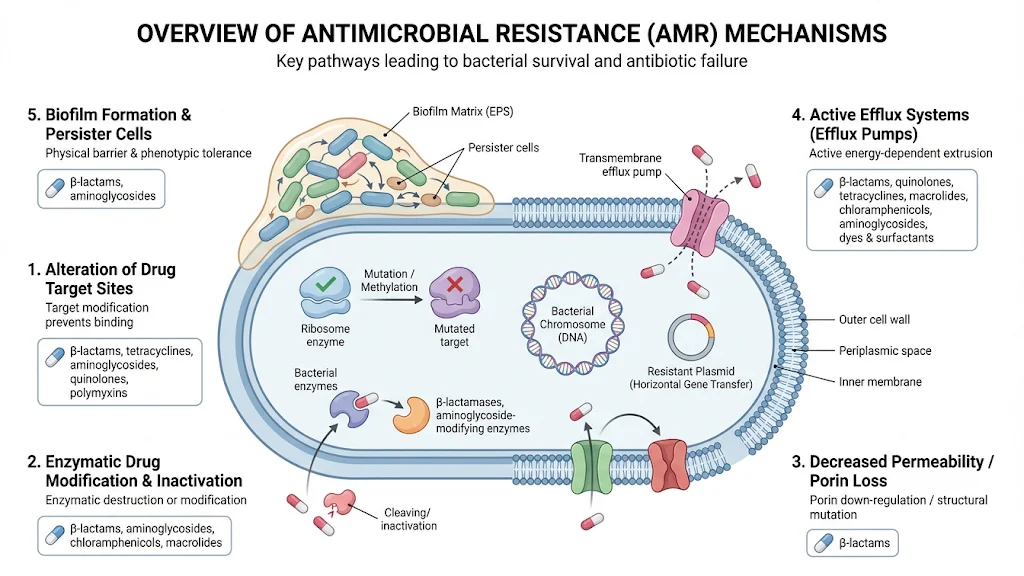
- Target alteration: Mutating or methylating drug-binding sites (such as ribosomes or cell-wall targets) so antimicrobials cannot bind effectively.
- Enzymatic inactivation: Producing enzymes—such as β-lactamases or carbapenemases—that cleave or modify antibiotics before they reach their targets.
- Permeability barriers & porin changes: Reducing influx or altering outer-membrane porins to limit drug entry.
- Active efflux pumps: Pumping antimicrobials and toxic compounds back out of the cell using energy-dependent transport systems.
1.2 Persistence, Quorum Sensing, and Biofilms
Resistance allows bacteria to grow in the presence of a drug, whereas persistence allows a dormant or slow-dividing subpopulation (“persister cells”) to weather the storm and rebound once treatment stops.
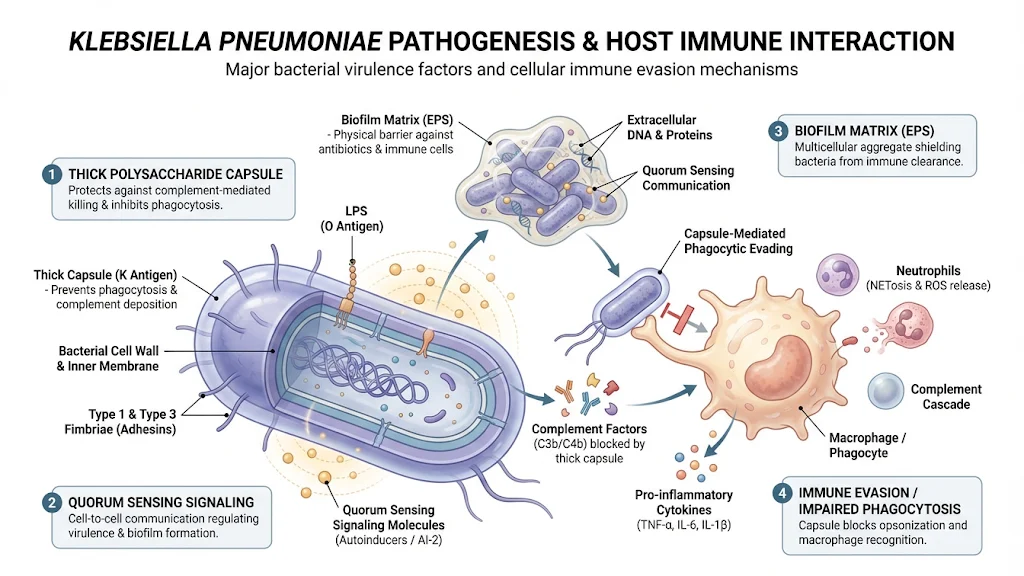
- Quorum sensing (QS): Bacteria release and sense chemical signaling molecules to gauge local population density. Once a threshold is reached, they coordinate group behaviors—turning on virulence factors, stress defenses, and matrix production in unison.
- Biofilms & EPS: Guided by quorum sensing, bacteria anchor to surfaces or tissues and build a protective extracellular polymeric substance (EPS) matrix. This shield slows antibiotic penetration, traps or neutralizes drugs, shelters persister cells, and alters local microenvironments (such as pH and oxygen levels) that blunt drug activity.
1.3 Immune System Crosstalk and Klebsiella’s Clever Tricks
In the host, bacteria do not simply hide from drugs—they actively negotiate and contend with innate and adaptive immunity:
- Immune evasion & modulation: Surface structures and secreted factors help bacteria resist phagocytosis, dampen complement activity, and trigger inflammatory cascades (such as LPS/endotoxin signaling) that cause collateral tissue stress while distracting or exhausting local immune responses.
- Klebsiella’s survival toolkit: Klebsiella species are notorious opportunistic pathogens—especially in urinary and healthcare-associated settings—because they stack multiple defenses:
- Thick polysaccharide capsules that physically block phagocytic engulfment and complement deposition.
- Mobile resistance plasmids carrying high-consequence carbapenemase genes (such as bla OXA-48 and bla NDM-1) alongside other resistance cassettes.
- Robust biofilm formation and efflux activity that help communities endure both immune pressure and broad-spectrum antibiotics.
2. Exploiting Plasmid Curing
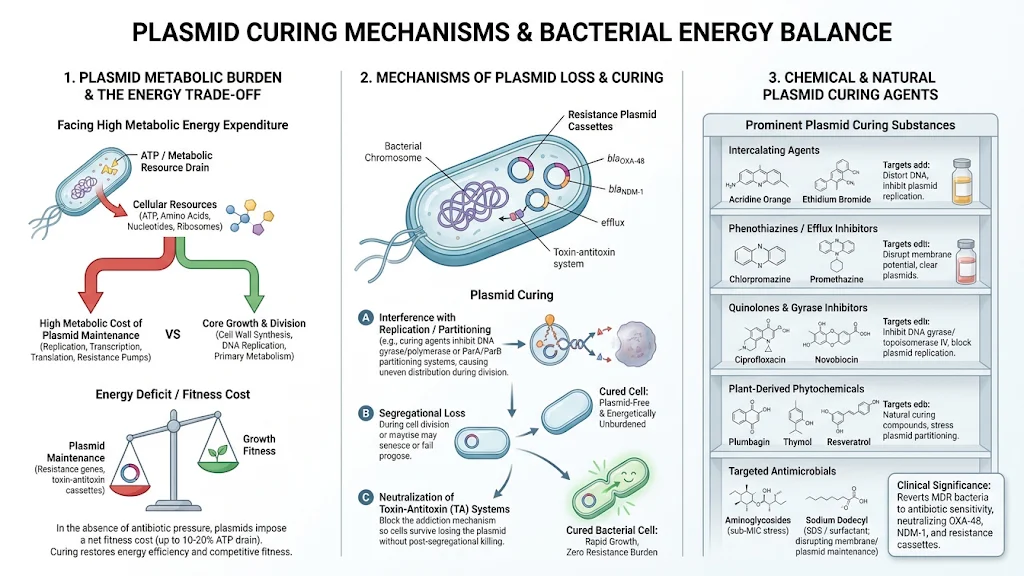
Resistance plasmids are powerful survival assets when antibiotics are present, but they are not free. Replicating plasmid DNA, transcribing extra genes, expressing resistance enzymes, and running efflux pumps all draw on a bacterium’s finite budget of ATP, nucleotides, and amino acids.
2.1 The Bacterial Energy Trade-Off & Plasmid Curing
When a bacterium faces heavy energetic stress or when the selective advantage of a plasmid is disrupted, maintaining extra plasmids creates a fitness cost. Plasmid curing occurs when cells lose plasmids—through interference with replication or partitioning, neutralization of addiction/toxin–antitoxin systems, or segregational loss during cell division—producing cured cells that shed that metabolic load.
3. Enzymatic Support for Dismantling Intracellular Bacterial Communities (IBCs)
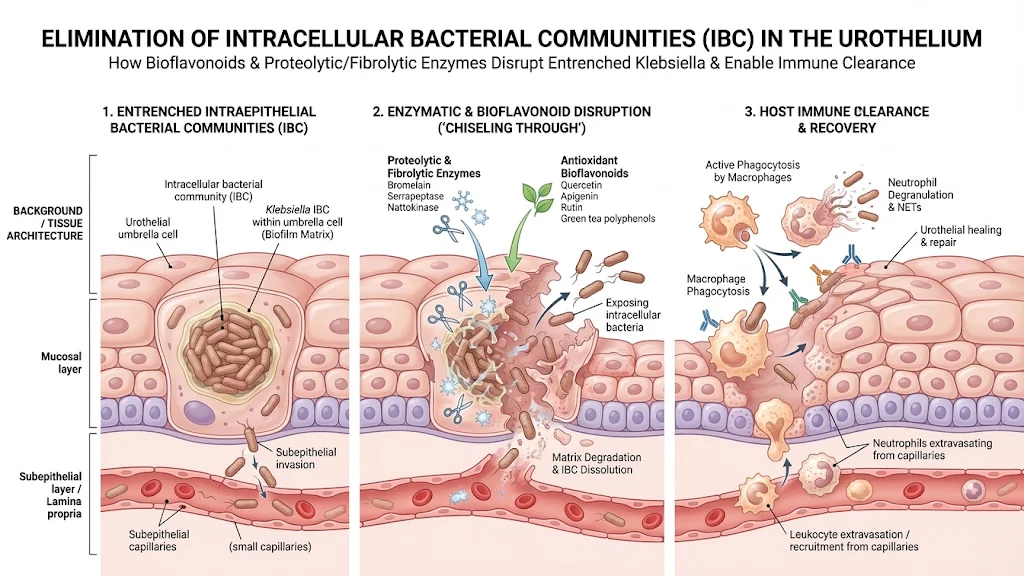
When pathogens such as Klebsiella establish entrenched intracellular bacterial communities (IBCs) within superficial urothelial umbrella cells and deeper subepithelial niches, they shelter inside dense, protein-and fibrin-rich extracellular polymeric matrices that shield them from both antibiotics and host phagocytes. Targeted proteolytic and fibrinolytic enzymes—including serrapeptase, nattokinase, lumbrokinase, and trypsin, chymotrypsin—help systematically break down this structural armor. By cleaving cross-linked fibrin, denatured proteins, and adhesive matrix scaffolding, these enzymes reduce local microvascular congestion in subepithelial capillaries, dissolve biofilm barriers, and expose sheltered persister bacteria to antimicrobial agents and recruited neutrophils and macrophages. Once the physical matrix is destabilized and microcirculatory perfusion improves, host immune clearance and tissue repair can proceed cleanly without leaving behind protected bacterial reservoirs.
4. How We Applied This Strategy in a 91-Year-Old Patient
Treating a 91-year-old patient with a severe, longstanding urinary and systemic infection—marked by high baseline inflammation (an initial CRP of 171 eleven months earlier), hematologic strain, carbapenemase-producing threats (OXA-48 and NDM-1), and Pseudomonas and Proteus coinfections—requires extreme care. Aggressive, uncalibrated drug escalation in a nonagenarian carries major toxicity and frailty risks.
Instead of relying solely on brute-force antibiotic escalation, the strategy focused on weakening the bacterial survival architecture and pushing the balance toward plasmid loss and clearance first:
- Suppressing biofilms and structural defenses: Breaking down protective matrix/biofilm support and reducing endotoxin/LPS-driven inflammatory strain so pathogens could not simply hide behind a physical shield.
- Applying targeted efflux pump inhibition (EPI) alongside β-lactam/β-lactamase therapy: Pairing a 14-day Amoxiclav (amoxicillin/clavulanate) course with targeted efflux pump inhibitors constrained active drug extrusion and compounded metabolic/stress pressure on resistant cells.
- Capitalizing on fitness costs and curing pressure: By disrupting resistance/stress defenses and pairing antimicrobial pressure with curing/anti-efflux support, resistant populations faced steep energetic and survival trade-offs—allowing susceptible or plasmid-cured states to be cleared rather than entrenched.
The payoff in this case was measurable and clinical: clearing Pseudomonas and Proteus coinfections, achieving a clear urinalysis (clear appearance, pH 5, negative nitrites, no bacteria) and a urine culture with no pathogenic bacteria isolated, and seeing a 91-year-old patient move through a 14-day simple Amoxiclav antibiotic and EPI components into a stable, afebrile, hemodynamically steady post-antibiotic window.
Disclaimer: This information is provided strictly for scientific and educational purposes and is not a substitute for personalized medical care from a qualified treating physician. Take care when choosing your physician, as standards, ethics, and adherence to the Hippocratic oath and applicable laws vary widely. A physician is an advisor and practitioner, not a supreme authority with power of life and death over your body, despite how some may present themselves. Physicians can make mistakes. Take an active role in learning about your health and diagnosis, leave no stone unturned, press for clear answers to your follow-up questions, and consult multiple independent opinions before committing to significant medical decisions about your health.