
Before You Read On: If you haven’t read the background yet, start with The Stradiya Protocols—Part 1: A Full Clinical Timeline, Biochemical Audit, and Institutional Failure Analysis of Public Health Cover-Ups, where we map out the clinical timeline, biochemical findings, and institutional breakdowns that set the stage for this resolution.
1. Escaping the Claws of Klebsiella
In The Shawshank Redemption 1994 movie classic, Andy Dufresne tunnels out of a maximum-security prison through sheer endurance, methodical planning, and an improbable refusal to accept a life behind bars. Bringing a 91-year-old patient out of the grip of a dual OXA-48 / NDM-1 Klebsiella pneumoniae infection, complicated by coinfections with resistant Pseudomonas aeruginosa and Proteus Mirabilis—and out of the reach of institutional dead ends and hospital errors—is an equally improbable feat. Our patient also required endurance, planning his way out, and a refusal to accept a de facto death sentence from a rigid, senseless public health system that seemed intent on burying its own mistakes, negligance and ignorance alongside with him. Where Part 1 laid bare the acute crisis, the biochemical realities, and the systemic failures of public health protocols, Part 2 you are now reading, begins at the threshold of recovery: Trial Without Catheter (TWOC) succeeded, natural voiding is restored, and a 14-day course of Amoxiclav (Amoxicillin-Clavulanic acid – other names Amoksiklav or Augmentin) has been completed.

Two post-treatment urine tests—one taken immediately after Amoxiclav and a follow-up test one week later—both found no evidence of pathogenic bacteria. The first post-Amoxiclav urinalysis showed no pathogenic bacterial growth alongside a small presence of erythrocytes and hemoglobin, while the second test one week later came back all clear: no pathogenic bacteria, negative nitrites, negative proteins, and a favorable acidic pH. Together, these results indicate clearance of detectable uropathogens and a transition from mild initial red-cell/hemoglobin presence to a clean urinary profile without nitrites or proteinuria.
What stands behind that milestone is no accident. The campaign began with an MDR/XDR dual OXA-48 and NDM-1 profile where Ceftazidime-Avibactam plus Aztreonam (CZAA) appeared to be the only conventional lifeline. Along the way came sepsis, biliary inflammation, repeated biofilm disruption, and waves of LPS/EPS endotoxicity—all navigated while balancing more than 60 interacting biological, botanical, nutritional, and pharmacological components. Every adjustment had to keep the patient hemodynamically and metabolically steady while shielding him from secondary cascades, bringing him safely through Trial Without Catheter (TWOC) to independent, natural voiding.
2. Multi-Level Architecture of Addressing Klebsiella
Holding ground against an entrenched, multidrug-resistant pathogen requires intervening across multiple biological, chemical, and physical tiers at once—and sequencing pressure deliberately so antibiotics are not forced to fight full-strength resistance alone:
- Pre-Antibiotic Resistance Disarming & Targeted Antimicrobial Pressure: Before any systemic antibiotics were administered, the strategy focused on plasmid curing, jamming efflux pumps, and suppressing resistance enzymes so the bacteria’s defensive shield was weakened in advance. Only then was calibrated antibiotic coverage—such as the completed 14-day Amoxiclav course made possible—applied and timed to suppress bacterial replication without leaving an unguarded window for resistance selection or peristers awakening.
- Urinary & Local Antiseptic Action: Achieving direct, localized bactericidal or bacteriostatic activity within the urinary tract environment to clear planktonic organisms and prevent ascending or persistent colonization.
- Biofilm Disruption & Anti-Adhesion Mechanics (Including Nx, NAC, and D-Mannose): Breaking up protective extracellular polymeric substance (EPS) matrices and blocking fimbrial attachment so bacteria cannot anchor to the urothelium or rebuild shielded reservoirs—with Nitroxoline (Nx) and N-acetylcysteine (NAC) disrupting biofilms and mucoid/EPS structures, alongside D-mannose acting as a decoy/anti-adhesion barrier to prevent bacterial attachment and help clear unanchored organisms.
- Exogenous Proteolytic Enzymes (Serrapeptase, Nattokinase, Lumbrokinase): Deploying systemic proteolytic and fibrinolytic enzymes—specifically serrapeptase, nattokinase, and lumbrokinase—to break down fibrin meshes, clear microvascular microthrombi in compromised capillaries, dismantle proteinaceous scaffolds shielding intracellular bacterial communities (IBCs) and biofilms, and facilitate the physical flushing of trapped debris and bacteria out of tissue niches.
- Quorum Sensing Inhibition & Quenching: Disrupting bacterial cell-to-cell communication by quenching Autoinducer-2 (AI-2) signaling pathways. By intercepting AI-2 quorum sensing—through targeted dietary/botanical quorum-quenching agents (such as boron, proanthocyanidins, furanone/polyphenol-rich botanicals and competitive signal-interfering compounds) alongside pH and redox modulation—the colony was prevented from coordinating collective virulence, synchronized biofilm maturation, and stress-response switching.
- Iron Sequestration, Safe Iron Handling & Immunomodulation: Restricting access to free and heme/hemoglobin-derived iron—the metabolic fuel pathogens rely on to replicate, build capsules/biofilms, and power metallo-enzymes—so bacterial growth is starved rather than fed. A wounded, bleeding urothelium acts as a rich source of hemoglobin and iron for the bacteria; once mucosal and GAG healing sealed the bladder wall and stopped micro-bleeding, depriving the pathogen of iron became substantially easier. Lactoferrin played a key multi-functional role here: binding available iron tightly to keep it away from Klebsiella siderophores, helping shuttle iron safely to support recovery from anemia, and providing important immunomodulatory support to calm excessive inflammatory signaling without impairing host defense.
- Hydrodynamic Flushing & pH/Microenvironment Control: Using consistent fluid throughput, voiding mechanics, and urinary pH modulation (maintaining an acidic environment such as pH 5.5) to physically wash out detached organisms and keep the local terrain unfavorable to pathogen survival and mineral/biofilm persistence.
- Mucosal Healing & Glycosaminoglycan (GAG) Layer Restoration: Actively rebuilding the bladder’s protective glycosaminoglycan (GAG) barrier and supporting urothelial mucosal repair so underlying tissue is shielded from urinary irritants, noxious solutes, and renewed bacterial attachment.
- Endotoxin (LPS/EPS) Buffering & Inflammatory Modulation: Dampening the collateral damage of bacterial die-off and immune overreaction—preventing runaway inflammatory cascades, oxidative stress, and vascular instability when bacterial structures break apart.
- Host Terrain, Metabolic Regulation & Systemic Tissue Repair: Supporting erythropoiesis, iron balance, electrolyte stability, broader tissue repair, and overall physiological resilience so a 91-year-old host can sustain recovery and maintain homeostasis rather than feeding bacterial growth or succumbing to exhaustion.
- Microbiome & Ecological Stewardship: Protecting beneficial microbial balance and avoiding unnecessary collateral disruption so opportunistic or resistant strains cannot easily reclaim dominance once acute pressure is eased.
3. Where We Stand Now
With TWOC holding, natural voiding established, and the 14-day Amoxiclav course behind us, the immediate priority shifts from emergency containment to verification under real-world conditions. Two post-treatment urine tests—one right after Amoxiclav and a follow-up a week later—have already confirmed no pathogenic bacteria, moving from a small presence of erythrocytes and hemoglobin on the first test to a completely clear second check with no nitrites, no proteins, and a favorable acidic pH.
Ongoing surveillance—including follow-up cultures, biochemical panels, and confirmation—will continue to track whether stability holds once antibiotic pressure clears, with updates added as each checkpoint comes back.
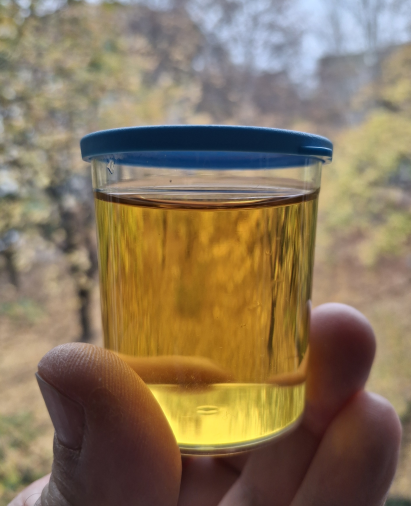
3.1 What One Week Past Amoxiclav Show
Urinalysis is remarkably clean—even quieter than the previous week report, with zero cellular or bacterial sediment reported:
- Physical & Chemical Profile: The urine is clear and yellow with an acidic pH of 5 and a specific gravity of 1.010. Bilirubin is negative, urobilinogen is normal, and ketones and glucose are both negative.
- Infection & Bleeding Markers: Nitrites, proteins, and hemoglobin are all negative.
- Microscopic Sediment: Erythrocytes, leukocytes, squamous epithelial cells, hyaline casts, crystals, bacteria, and other elements are all absent from the lab report.
- Urine culture: No pathogenic bacteria found.
From a biochemical and microscopic standpoint at Day 7 post-antibiotic, there is no active nitrate reduction, no hematuria or proteinuria, and no visible leukocytes or bacteria in the sediment. Across two consecutive negative pathogen reports—starting with the earlier HB&L UROQUATTRO culture on the last day of Amoxiclav 14-days course showing no pathogenic bacteria isolated alongside rare/planktonic bacteria on urinalysis, followed by the latest report zero sediment bacteria—with a confirmed negative antibiogram finding no pathogenic bacteria, the immediate post-antibiotic washout window is confirmed clear.
By any clinical or microbiological standard, this is a remarkable result, especially given the full context of the case. Why this carries real weight is the contrast between where things started and where they stand now: an initial CRP of 171 eleven months ago, severe hematologic strain, carbapenemase-producing threats (OXA-48 and NDM-1), cleared Pseudomonas and Proteus coinfections, efforts to disrupt biofilms/EPS and endotoxin burden, a 14-day Amoksiklav plus double-EPI regimen, and a 91-year-old patient remaining stable, afebrile, and hemodynamically steady through the immediate post-antibiotic window.
Tests will be repeated 14 days after finishing course and one month after.
3.2 What to Expect Over the Next 7 Days (Days 7–14 Post-Antibiotic)
- Full Antibiotic Washout: Systemic and urinary levels of Amoxiclav are completely gone, meaning the maintenance stack, D-mannose anti-adhesion, pH control, polyphenols and 500 mL voiding cycles are carrying the load on their own.
- Watching for Early Rebound or Settling: If dormant persisters or unexposed pockets had survived in large enough numbers to rebound, early signs—such as shifting urinary clarity, rising leukocytes/nitrites on dipstick/microscopy, or changes in voiding comfort or vitals—may begin to surface within the first one to two weeks off antibiotics.
- Expected Trajectory if Clearance Holds: Continued clear, acidic urine, negative nitrites/protein/hemoglobin, calm voiding, and steady blood pressure and heart rate as the urothelium and GAG layer continue settling without antibiotic pressure.
3.3 What to Expect Over the Next 1 Month (Day 30 Checkpoint)
- True Durability Test: Reaching one month post-Amoxiclav will be a much stronger test of durability than a single week or two, because any low-level surviving organisms or lingering mucosal irritation have more time to declare themselves.
- Host Terrain & Recovery Signals: Over a full month off systemic antibiotics, continued attention to hydration/voiding mechanics, GAG and mucosal support, iron/anemia recovery, electrolyte balance, and avoiding secondary infections or unnecessary instrumentation helps lock in stability.
- Clinical Vigilance in a 91-Year-Old: Even with clean urine markers, ongoing observation of hydration status, bowel/gut and prostate comfort, temperature, blood pressure, and heart rate remains essential—alongside planned 1-month lab checks and multi-month surveillance cadence—to catch any subtle shift early rather than waiting for an acute flare.
From a clinical and epidemiological perspective, this outcome is already remarkable—far surpassing what standard statistical expectations would predict for an elderly patient facing a severe, complex urinary and systemic infection complicated by marked inflammation and high-risk resistance dynamics. Navigating that entire arc—from an initial CRP of 171 eleven months ago, alongside severe hematologic strain and OXA-48 / NDM-1 carbapenemase-producing organisms, through Pseudomonas and Proteus coinfections that were successfully cleared, while suppressing biofilm formation and LPS/EPS toxicity, culminating in a final 14-day Amoxiclav course supported by targeted efflux pump inhibitors (EPIs), and now entering a stable, afebrile, hemodynamically steady day-7 post-antibiotic window without slipping into the downward spiral often seen in older adults—represents genuinely extraordinary progress.
4. Why Redemption Took 11 Months: Terrain, Timing, and the Cost of Rushing
In a 91-year-old patient recovering from severe multidrug-resistant infection, hospital-acquired setbacks, and deep physiological strain, recovery does not follow a linear textbook curve—it moves in staged waves. Taking 11 months to reach sterile post-antibiotic baseline and independent, catheter-free voiding reflects the fundamental difference between knocking down an acute crisis and rebuilding durable biological resilience.
4.1 Why 11 Months Was Necessary
- Acute Stabilization Had to Come First: Early phases had to contain life-threatening instability—including septic inflammatory surges, biliary inflammation, and severe vascular swings—before invasive transitions or catheter removal could even be considered.
- Biofilms and Protected Reservoirs Clear Gradually: Entrenched bacterial communities, extracellular polymeric substance (EPS) matrices, and intracellular or mucosal niches cannot be erased overnight. Dismantling them safely required repeated, controlled cycles of disruption paired with endotoxin buffering so die-off waves did not overwhelm the host.
- Host Tissue Repair at Age 91 Cannot Be Rushed: Cellular remodeling, erythropoiesis and iron restoration, endothelial repair, and immune recalibration obey biological clocks. Pushing the pace risks exhausting a 91-year-old system or triggering secondary inflammatory cascades.
- Verification Over Premature Victory: Moving deliberately from pre-antibiotic resistance disarming through targeted therapy, post-treatment washout, repeat cultures, and longitudinal surveillance ensures stability holds off acute drug pressure rather than relying on a single misleading snapshot.
4.2 The Risks of Early Catheter Removal in an Injured Patient
Pulling a catheter too early when the bladder wall, urethra, and surrounding organs are still inflamed or structurally compromised turns a milestone into a high-stakes gamble:
- Acute Urinary Retention & Overdistension: If detrusor contractility, outlet mechanics, or inflammatory signaling are not ready, urine backs up—driving immediate mechanical stress, pain, and autonomic blood pressure spikes.
- Incomplete Emptying & Stasis: Residual urine acts as a stagnant incubator where any surviving Klebsiella cells can multiply rapidly and re-establish colonization.
- Trauma to a Vulnerable Urothelium: An inflamed, denuded bladder lining is prone to micro-bleeding, mucosal tearing, and symptom flares when challenged with unassisted voiding too soon.
- Cascading Systemic Setbacks: In a frail patient already injured by infection and hospital errors, a failed Trial Without Catheter (TWOC) triggers pain, sleep deprivation, sympathetic overdrive, and multi-organ strain that can erase months of hard-won progress.
4.3 Rebuilding the Whole Terrain Before Pulling the Line
Durable catheter-free function required restoring the surrounding physiological systems so the bladder was not trying to heal inside a hostile, inflamed environment:
- Clearing Blood Vessels & Healing the Endothelium: Restoring microvascular perfusion and endothelial nitric oxide signaling delivered oxygen, nutrients, and immune surveillance while stabilizing vascular tone.
- Strengthening the Bladder GAG Layer & Mucosa: Rebuilding the protective glycosaminoglycan (GAG) shield and urothelial lining prevented urinary irritants, noxious solutes, and residual bacteria from re-attaching to exposed tissue.
- Calming Inflammation in the Gut & Prostate: Because the intestines and prostate share anatomical proximity, vascular drainage, and autonomic pathways with the bladder, quieting inflammation in both reduced pelvic cross-talk and systemic inflammatory noise.
- Strengthening the Kidneys & Heart: Renal function governs fluid throughput, electrolyte precision, and acid-base balance, while cardiac stability sustains perfusion across every healing tissue—making both indispensable prerequisites for safe recovery at age 91.
4.4 Mechanical & Structural Restoration: Bladder Washout Phase
Once the bladder’s glycosaminoglycan (GAG) layer recovered and became impenetrable to Klebsiella pneumoniae (Kp) again—and once sub-urothelial intracellular bacterial communities (IBCs) had been largely cleared alongside the breakdown of fibrin meshes, microthrombi, and compromised tiny capillaries via fibrinolytic enzymes and bio stack components—a successful Trial Without Catheter (TWOC) unlocked a decisive mechanical advantage.
- Eliminating Crypts and Anchoring Niches: An empty, chronically irritated, or catheter-decompressed bladder sits soft and folded, creating curvatures, crevices, and sheltered niches where bacteria can cling and resist hydraulic shear stress. Once natural filling and voiding resumed across 500 mL × 7 voids per day × 14+ days (nearly 50 liters of cumulative high-volume throughput), the bladder walls expanded and flattened under normal physiological filling—becoming as smooth as the wall of an inflated balloon.
- Reaching Formidable Intra-Bladder Concentrations: Now that the bladder was filling up to 500 mL and holding urine between natural voids, continued bio stack components accumulated and dwelled inside the lumen at much higher concentrations—unlike during the indwelling catheter phase, when urine drained continuously and flushed compounds out too quickly to reach minimum inhibitory concentrations (MICs), with few exceptions.
- Full Exposure to Hydraulic Shear & D-Mannose: With folds smoothed out and the GAG barrier sealed, any remaining planktonic or weakly attached bacteria had nowhere to hide from the mechanical sweep of 500 mL voiding cycles. Simultaneously administering D-mannose bound bacterial FimH adhesins in the open lumen, preventing re-attachment to the smoothed urothelium and allowing each full-volume flush to carry detached organisms cleanly out of the body.
4.5 Was the Timing Optimal—and Can Treatment Be Shorter and Cheaper?
Timing is optimal when biological readiness dictates the calendar, rather than forcing a milestone before the terrain can support it. Waiting until acute crises had resolved, inflammatory and hemorrhagic urinary markers were quiet, voiding mechanics were supported, and hemodynamics were steady made TWOC a calculated, low-risk transition rather than an improvisation.
The long-term goal was full recovery and eradication of Klebsiella pneumoniae (Kp). In the short term, the priority was shifting an acute Kp infection into a controlled chronic state, then strengthening the patient’s systems while methodically chipping away at Kp‘s defenses and trickery. Throughout that phase, the patient had to be kept stable and all avoidable risks carefully managed. When the moment was right, we struck against Kp using the tools available to us. Measured in months, time mattered far less than actually meeting the main goal. Furthermore, iatrogenic coinfections with Pseudomonas and Proteus introduced during nursing care slowed progress down by at least three months; had those secondary setbacks been avoided, a 6-to-8-month timeframe would have been entirely reasonable.
Could such treatment be shorter and cheaper? On paper, stripped-down protocols always look less expensive upfront. In uncomplicated infections in younger, robust patients, shorter courses often suffice. In a 91-year-old patient carrying dual OXA-48 / NDM-1 resistance history and prior hospital injury, however, cutting corners or rushing timelines is a false economy: premature failure leads straight back to relapse, emergency readmissions, toxic last-resort drugs, and severe physiological toll—costing far more in both resources and survival.
Andy Dufresne didn’t blast his way out of Shawshank in a single afternoon—he chipped through concrete over nearly twenty years with a tiny rock hammer the prison system dismissed as a useless toy. Our multi-level bio stack worked the exact same way: quietly chipping away at biofilms, iron access, and Kp’s defenses month after month until a simple finishing antibiotic could break the wall. Against that yardstick, 11 months—especially with three months lost to preventable nursing coinfections—isn’t too bad at all.
The objective was never duration or complexity for its own sake, nor artificial speed at the expense of durability, but structured, multi-layered execution until the host could stand on its own.
5. Why Klebsiella Relapses: IBCs, Persisters (“Sleepers”), and the Limits of Antibiotics Alone
Klebsiella pneumoniae (Kp) is notorious for high relapse rates—even after an initially clean culture—because clearing planktonic bacteria from the urine does not automatically eliminate sheltered subpopulations hiding inside the host. Treating Kp solely as an “antibiotic problem” or a simple battle between drugs and immunity leaves behind the exact reservoirs responsible for recurrence:
- Intracellular Bacterial Communities (IBCs): Kp invades superficial urothelial umbrella cells and forms protected intracellular pods. Shielded behind host cell membranes, these communities are largely inaccessible to standard water-soluble antibiotics that concentrate in the urinary lumen rather than inside epithelial cells.
- Metabolically Dormant Persisters (“Sleepers”): Within biofilms and deep mucosal niches, a subpopulation of bacteria enters a low-metabolism, non-dividing dormant state. Because conventional bactericidal antibiotics (such as beta-lactams) target active cell-wall synthesis, DNA replication, or protein translation, they cannot kill metabolically inactive “sleepers.” Once antibiotic pressure stops, these dormant cells wake up, re-seed the lumen, and trigger relapse.
6. Why Multi-Level Sequencing Came Before Antibiotics
Because antibiotics cannot penetrate intact biofilm fortresses or eradicate dormant intracellular sleepers on their own, the therapeutic sequence had to dismantle the pathogen’s physical and metabolic defenses before relying on antibiotic windows:
- Dismantling Biofilms & Exposing Hidden Niches First: Before opening an antibiotic window, the primary focus was breaking down extracellular polymeric substance (EPS) matrices, disrupting mucoid shields, and supporting normal urothelial turnover so sheltered bacteria and emerging IBCs were forced out into the open lumen where local antiseptics, anti-adhesion agents, and hydrodynamic flushing could clear them.
- Iron Sequestration to Starve Wake-Up & Virulence: Pathogens need iron to fuel metabolic reactivation, capsule assembly, biofilm rebuilding, and metallo-enzyme activity. Restricting free and heme-derived iron deprived surviving cells of the catalytic fuel required to wake from dormancy, replicate, or re-establish virulent colonies.
- Disarming Resistance & Opening the Antibiotic Window: Only after biofilms were weakened, iron was restricted, efflux pumps were jammed, GAG was restored and plasmid/enzymatic defenses were suppressed was targeted antibiotic pressure introduced—striking an exposed, metabolically vulnerable population rather than wasting firepower against fortified sleepers.
- Systemic Terrain Support Beyond Antimicrobials: Clearing persisters and preventing re-seeding required simultaneous support across mucosal/GAG barrier repair, pH and fluid dynamics, endotoxin buffering, gut-prostate inflammatory control, and cardiorenal stability—ensuring the host terrain itself became inhospitable to Klebsiella survival while sustaining a 91-year-old patient safely through recovery.
7. The True Cost of Blunt Medicine vs. Sequenced Home Redemption
Evaluating a high-cost hospital combination like Ceftazidime-Avibactam plus Aztreonam (CZAA) against a multi-level home protocol ending with Amoxiclav requires looking beyond price per dose. In a 91-year-old patient facing an MDR/XDR dual OXA-48 / NDM-1 Klebsiella pneumoniae challenge, true cost includes financial expense, biological effectiveness, patient comfort, and community transmission risk.
7.1 Cost Comparison: Blunt Hospital Protocol vs. Sequenced Home Protocol
| Cost Factor | Blunt Hospital Protocol (CZA + Aztreonam) | Sequenced Home Protocol + 14-Day Amoxicklav |
|---|---|---|
| Core Antibiotic (14 Days) | ~$20,000 – $25,000 USD for specialty combination therapy | ~$16 USD total (4 boxes at ~$4 USD each for Amoxiclav) |
| Hospital Bed / Stay (14–30+ Days @ ~$1,000/day) | ~$14,000 – $30,000+ USD (before ICU escalation or complications) | $0 USD inpatient bed cost (managed at home) |
| Multi-Level Bio/Terrain Protocol (~$500/mo × 11 mo) | Typically absent or minimal; focused on acute drugs rather than biofilm, GAG, and terrain repair | ~$5,500 USD across 11 months (~$500/month) |
| Estimated Baseline Total | ~$34,000 – $55,000+ USD (rises steeply with relapse or readmission) | ~$5,516 USD across 11 months (plus surveillance lab testing) |
Spending $500 per month for 11 months (~$5,500 USD) is a serious, disciplined commitment—yet it remains a fraction of a 2-to-4-week inpatient course of Ceftazidime-Avibactam and Aztreonam (CZAA) once hospital daily costs are factored in.
However, a debate over last-resort hospital drug such as Ceftazidime-Avibactam plus Aztreonam (CZAA) is completely artifical in our 91-year old patient case. On a paper, a regimen like CZAA looks like a textbook clinical answer, yet in real-world practice it often remains purely theoretical. Even when a drug is registered and a patient holds insurance coverage, institutional inertia, limited clinical familiarity with complex combination regimens, and age-based rationing or indifference toward a 91-year-old patient can mean that option never materializes at the bedside.
91-year old survival did not hinge on waiting for an institutional rescue that was never coming. It rested on family persistence, rapid self-directed mastery of the pathogen’s biology, and disciplined execution at home—turning an otherwise bleak outlook into documented post-TWOC function and clean initial post-treatment urinalysis and culture results.
7.2 Why Mechanism and Sequencing Decide the Outcome
Expensive hospital antimicrobials fail or fall short when applied bluntly against entrenched reservoirs without preparing the host terrain. Even when Ceftazidime-Avibactam plus Aztreonam (CZAA) targets carbapenemase activity, deploying it without addressing biofilms, intracellular bacterial communities (IBCs), dormant persisters (“sleepers”), or a damaged bladder glycosaminoglycan (GAG) layer leaves protected pockets behind that can seed relapse once drug pressure ends.
By contrast, Amoxiclav in this protocol was never asked to fight a fortress alone on Day 1. It arrived at the end of an 11-month multi-level sequence—after biofilms were disrupted, iron access was restricted, resistance mechanisms/efflux/enzymes were disarmed, mucosal and GAG barriers were healing, and surrounding organs and vessels were stabilized. Entering a weakened, exposed target allowed a low-cost 14-day course to act as the finishing coup de grâce, supported by clean urinalysis findings (negative nitrites, negative protein, negative hemoglobin, acidic pH 5.5, and low leukocytes/erythrocytes of 1–2 /hpf) and no pathogenic bacteria isolated on screening.
7.3 Patient Comfort, Survival, and Transmission Risk
“Comfort” cannot be measured merely by whether a patient avoids a pill or an infusion while facing a dual OXA-48 / NDM-1 threat at age 91:
- No Comfort in Death, Relapse, or Injury: There is no comfort in succumbing to unresolved infection or septic shock, no comfort in watching the infection relapse into pain, stasis, or urosepsis fear, and no comfort in suffering preventable hospital injury, catheter trauma, immobilization, or iatrogenic setbacks.
- Zero Contribution to Hospital Infection Spread: In a hospital ward, a patient carrying an MDR/XDR dual OXA-48 / NDM-1 organism sits inside a high-density environment with shared surfaces, equipment, and staff contact—risking onward transmission and inflating facility infection counts. At home, the patient does not infect other hospital patients or drive up nosocomial infection numbers, provided strict home hygiene, waste/sanitation handling, and careful protocols are consistently maintained by caregivers.
7.4 Division of Labor Across the Timeline
While we could not efficiently target planktonic bacteria during the catheter period or reach concentrations of bioactive components inside the bladder as high as we wanted—especially while the silicone catheter provided a primary anchoring surface even as the GAG layer and bladder walls grew more impenetrable—our pressure on intracellular bacterial communities (IBCs) and dormant persisters within the urothelium and endothelium was far more potent and constant across those 11 months. We deliberately focused on bringing that deeper reservoirs front under control first, leaving the remaining planktonic pathogens to Amoxiclav, Nitroxoline, and D-mannose once the terrain was ready.
7.5 Conclusion: Why Disciplined Home Care Wins
For a 91-year-old patient recovering from severe infection and hospital-acquired harm, chasing a $20,000–$25,000 blunt drug course inside a high-risk hospital setting is neither guaranteed nor protective of dignity or survival. A structured, multi-level home strategy—rebuilding vascular and endothelial health, restoring the GAG layer and mucosa, controlling iron and inflammatory stress, protecting caregivers through strict hygiene, and deploying targeted antibiotics only once the terrain is ready—offers a far more coherent path to real recovery, lower total cost, greater comfort, and lasting redemption.
Upon successful TWOC and continuing the bio stack, there was a real possibility that an already weakened Klebsiella pneumoniae planctonic population might have been flushed out naturally as the patient grew stronger and his mucosal, vascular, and immune defenses recovered. However, in a 91-year-old patient with a history of severe complications, testing that hypothesis was not a risk worth taking—making a calibrated, targeted finishing course of Amoxiclav the decisive step to lock in clearance rather than gambling on spontaneous washout alone.
Educational Disclaimer: This information is provided strictly for scientific and educational purposes and is not a substitute for personalized medical care from a qualified treating physician. Take care when choosing your physician, as standards, ethics, and adherence to the Hippocratic oath and applicable laws vary widely. A physician is an advisor and practitioner, not a supreme authority with power of life and death over your body, despite how some may present themselves. Physicians can make mistakes. Take an active role in learning about your health and diagnosis, leave no stone unturned, press for clear answers to your follow-up questions, and consult multiple independent opinions before committing to significant medical decisions about your health.