
Michel Foucault viewed medicine not as a pure, neutral science, but as a social and political institution deeply tied to power, economic systems, and the regulation of human bodies. His landmark 1963 book, The Birth of the Clinic, explores how modern medical perception transformed clinical practice and social control.
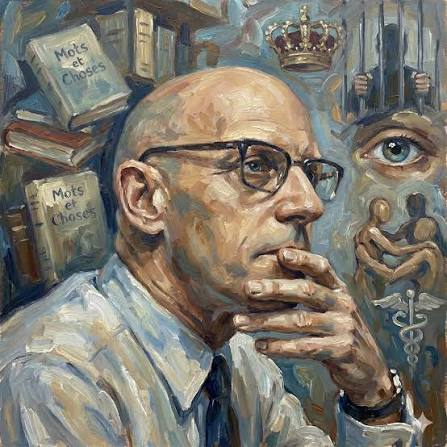
The Medical Gaze
- Shift in perception: In the late 18th century, medicine changed from listening to a patient’s subjective story to a clinical approach focused on physical anatomy.
- Objectification: The doctor looks past the human person. They treat the body as an object of biological systems, disease, and tissue mapping.
- Filtering: The medical gaze filters out social or personal details that do not fit standard biomedical categories.
Medicine and Power
- Power-knowledge: Foucault argued that knowledge is never neutral. Medical truths create frameworks of power that define what is “normal” and what is “abnormal”.
- Medicalization: Medical ideas spread past hospitals into everyday life. Society uses medical standards to manage and regulate human behavior.
- Social spaces: Public health and state medicine act as tools to survey and control large populations.
https://en.wikipedia.org/wiki/The_Birth_of_the_Clinic
https://www.slideshare.net/slideshow/foucault-and-sociology-of-medical-knowledge/242703754